Trong bài giải mẫu lần này, cô Trần Minh Anh – giáo viên tại The IELTS Workshop sẽ hướng dẫn bạn trả lời topic Describe a person who often helps others trong IELTS Speaking Part 2. Cùng tham khảo sample, từ vựng và một vài cách diễn đạt ghi điểm trong phần thi IELTS Speaking nhé.
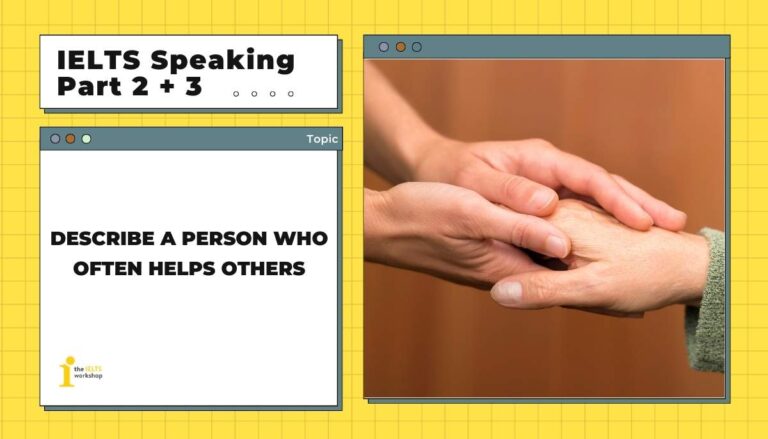
Part 2: Describe a person who often helps others
Đề bài: Describe a person who often helps others
You should say:
- Who this person is
- How often he/she helps others
- How/why he/she helps others
- And how you feel about this person
1. Bài mẫu (Sample)
A person who often helps others is my older sister, who works as a nurse in a public hospital. She is someone who is always willing to lend a hand, regardless of how busy she is. I have known her my whole life, and I can confidently say that helping others is part of her personality.
In terms of how often she helps people, it happens almost every day. At work, she takes care of patients, many of whom are elderly or seriously ill. What impresses me most is not only her professional responsibility but also her emotional support. She listens patiently to patients’ concerns and reassures them, which is something that not everyone is capable of doing.
Outside of work, she also volunteers at community health campaigns, providing free medical check-ups for underprivileged families. Having grown up in a modest household, she understands how difficult it can be to afford proper healthcare, which is why she feels a strong sense of responsibility to give back to society.
What I truly admire about her is that she never expects anything in return. If more people were as compassionate as she is, society would be a much better place. Her dedication has inspired me to become more considerate and supportive toward others. Overall, she is not only a caring professional but also a role model in my life.
Sample by Tran Minh Anh – IELTS Teacher at The IELTS Workshop
2. Từ vựng (Vocabulary)
- lend a hand: giúp đỡ
- emotional support / encouragement: hỗ trợ, động viên tinh thần
- underprivileged families: gia đình có hoàn cảnh khó khăn
- modest household: gia đình không khá giả
- give back to society: đóng góp lại cho xã hội
- compassionate: giàu lòng trắc ẩn
- role model: hình mẫu
- workload: khối lượng công việc
- expand professional network: mở rộng mối quan hệ nghề nghiệp
- sense of responsibility: tinh thần trách nhiệm
Part 3:
1. Do you think schools should teach children to do household chores?
Yes, I believe schools should encourage children to take responsibility for household chores. Learning to cook, clean, or manage time helps them develop independence and practical life skills. Not only does it build responsibility, but it also fosters a sense of appreciation for their parents’ efforts.
2. Why are employees reluctant to ask their managers for help?
Many employees hesitate to seek help because they are afraid of appearing incompetent. In competitive workplaces, people often worry that asking questions might damage their professional image. Additionally, some managers may not create an open and supportive environment, which discourages communication.
3. What can children do to help their parents?
Children can assist with simple tasks such as washing dishes, tidying their rooms, or taking care of younger siblings. Even small actions can significantly reduce their parents’ workload. More importantly, helping out at home teaches children empathy and cooperation.
4. Should children help their parents with household chores?
Absolutely. Contributing to household chores helps children understand the value of teamwork within a family. The earlier they learn these responsibilities, the more prepared they will be for adult life.
5. What kind of help do people need when looking for a new job?
Job seekers often need guidance with writing CVs, preparing for interviews, and expanding their professional network. Emotional encouragement is also important, especially if they have faced repeated rejection.
6. Who should people ask for help, colleagues or family members?
It depends on the situation. For professional matters, colleagues may provide more practical advice. However, family members usually offer emotional support and reassurance. Ideally, people should seek a balance between both sources of help.
Tạm kết
Hy vọng bài mẫu trên đã giúp bạn hình dung rõ cách triển khai ý tưởng và sử dụng ngôn ngữ phù hợp khi gặp chủ đề Describe a person who often helps others trong IELTS Speaking Part 2 & 3. Tham khảo các nguồn tài liệu hữu ích như KHO BÀI MẪU IELTS SPEAKING và Bộ đề dự đoán IELTS Speaking cập nhật mới nhất.
HỌC IELTS MIỄN PHÍ – lớp học độc quyền chỉ có trên website của The IELTS Workshop. Đăng ký để bắt đầu lộ trình học bài bản cùng thầy cô tại TIW ngay nhé!