Hãy cùng TIW tham khảo bài mẫu Male and female students studied in Australia for full-time and part-time education in 2006 do cô Phạm Thị Thu Hà hướng dẫn để học cách triển khai bài viết hiệu quả và ấn tượng hơn nhé!
1. Phân tích và hướng dẫn
1.1. Đề bài
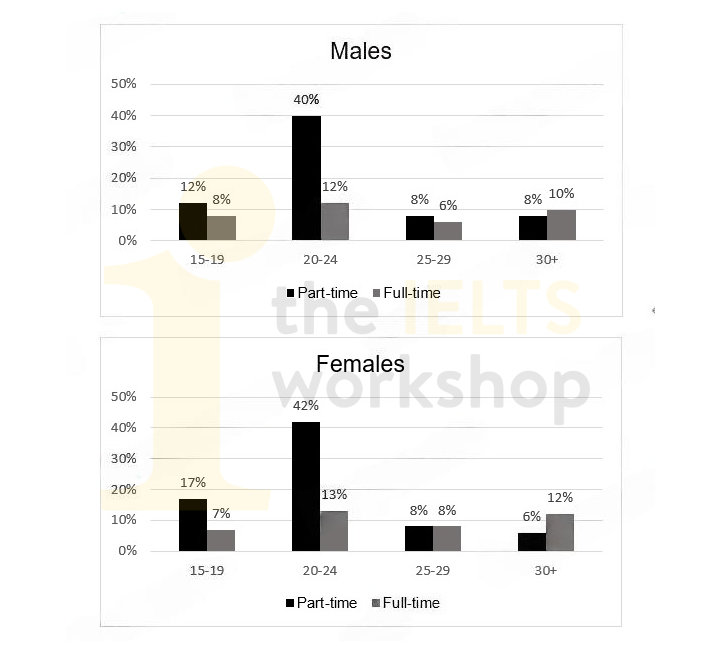
The charts below show the percentage of male and female students of different age groups who studied in Australia for full-time and part-time education in 2006. Summarize the information by selecting and reporting the main features, and make comparisons where relevant.
(Biểu đồ dưới đây mô tả tỷ lệ nam và nữ sinh viên thuộc các nhóm tuổi khác nhau theo học chương trình giáo dục toàn thời gian và bán thời gian tại Úc vào năm 2006. Hãy tóm tắt thông tin bằng cách lựa chọn và trình bày những đặc điểm nổi bật nhất, đồng thời đưa ra các so sánh liên quan.)
1.2. Phân tích đề bài
Dạng bài: Bar chart.
Từ khóa chính:
- percentage of male and female students
- age groups
- studied in Australia
- full-time and part-time education
Topic vocab: enrolment rates, to be enrolled in, participation rate, participated in.
Xem thêm: Các bước làm bài IELTS Writing Task 1 Bar Chart bạn cần phải biết
1.3. Dàn bài chi tiết
- Introduction: Paraphrase lại đề bài
The bar charts compare the enrolment rates of both male and female students, categorized by four age cohorts, in full-time and part-time education in Australia in 2006.
- Overview:
- Part-time study phổ biến hơn so với full-time study ở hầu hết các độ tuổi, trừ nhóm trên 30
- Nhóm 20-24 tuổi là nhóm tham gia mạnh nhất vào cả hai loại hình giáo dục, đối với cả nam và nữ.
Overall, part-time study was more common than full-time study in most age groups, leaving aside those aged over 30, who preferred the latter. It is also noticeable that the 20-24 age group showed by far the highest participation rates for both males and females.
- Body paragraph: Males và Females
- Males:
- Highest figure: The 20–24 age group recorded the highest participation rate, with 40% studying part-time compared with 12% studying full-time. This represents the largest gap between the two modes of study.
- 15–19 age group: The gap was narrower, with 12% studying part-time and 8% studying full-time.
- 25–29 age group: The proportions of full-time and part-time students were relatively similar.
- 30+ age group: The trend was reversed, as full-time study became more common than part-time study, at 10% compared with 8%.
- Femal es:
- The pattern was broadly similar to that of males, although the figures for females were slightly higher overall.
- Highest figure: The 20–24 age group again had the highest participation rate, with 42% studying part-time and 13% studying full-time.
- 15–19 age group: The gap was more noticeable than that among males, with 17% studying part-time compared with 7% studying full-time.
- 25–29 age group: The two modes of study were equally common, both standing at 8%.
- Males:
2. Bài mẫu
The bar charts compare the enrolment rates of both male and female students, categorized by four age cohorts, in full-time and part-time education in Australia in 2006.
Overall, part-time study was more common than full-time study in most age groups, leaving aside those aged over 30, who preferred the latter. It is also noticeable that the 20-24 age group showed by far the highest participation rates for both males and females.
Looking first at males, part-time education generally attracted more students than full-time study. The most striking figure was seen among those aged 20–24, 40% of whom studied part-time, compared with only 12% who were enrolled full-time. This represented the largest discrepancy between two modes of study. The gap narrowed among 15–19-year-olds, with 12% studying part-time and 8% opting for full-time. Among males aged 25–29, the figures were relatively close, at 8% and 6% respectively. However, the pattern was reversed in the oldest group, where full-time students slightly outnumbered their part-time counterparts, at 10% versus 8%.
A broadly similar pattern can be seen among female students, although their figures were generally slightly higher than those of males. The 20-24 age cohort again recorded the highest enrolment overall, with 42% studying part-time and 13% full-time, creating a gap of 29 percentage points. A sizeable difference was also seen among females aged 15–19, where the proportion in part-time education stood at 17%, more than double the figure for full-time study. In the 25–29 group, the two modes of study were equally common, at 8% each. By contrast, among women aged 30 and above, full-time education became dominant, attracting 12% students, which was twice the figure for part-time study.
Sample by Pham Thi Thu Ha – IELTS Teacher at The IELTS Workshop
3. Từ vựng
- enrolment rates: tỷ lệ ghi danh / tỷ lệ tham gia học tập
- four age cohorts/ groups/ categories: bốn nhóm tuổi
- by far the highest participation rates: tỷ lệ tham gia cao nhất rõ rệt / cao vượt trội
- the largest discrepancy: sự chênh lệch lớn nhất
- the gap narrowed: khoảng cách / sự chênh lệch thu hẹp lại
- the pattern was reversed: xu hướng bị đảo ngược
- outnumbered their part-time counterparts: nhiều hơn nhóm học bán thời gian tương ứng
- a broadly similar pattern: một xu hướng nhìn chung tương tự
- a sizeable difference: một sự khác biệt đáng kể
Tạm kết
Hy vọng rằng sau khi tham khảo bài mẫu chủ đề Male and female students studied in Australia for full-time and part-time education in 2006 trên học viên sẽ hiểu rõ hơn cách triển khai bài Writing Task 1 dạng Bar Chart một cách đầy đủ. Đừng quên đọc kỹ bài mẫu do cô Phạm Thị Thu Hà hướng dẫn và ghi chú lại những kiến thức quan trọng để từng bước nâng cao kỹ năng viết của mình nhé.
Tham khảo tài liệu: [Cập nhật liên tục] Tổng hợp đề thi IELTS Writing 2026 kèm bài mẫu và Bài mẫu Writing Task 1 trên website. Đây là nguồn tài liệu hữu ích để bạn luyện kỹ năng mô tả số liệu, rèn khả năng so sánh và nắm bắt xu hướng trong biểu đồ từ đó nâng cao hơn band điểm của mình.
Ngoài ra, đừng quên tham khảo HỌC IELTS MIỄN PHÍ trên website để có cơ hội học trực tiếp cùng giảng viên giàu kinh nghiệm giảng dạy để nắm rõ các kĩ năng làm các dạng bài IELTS.