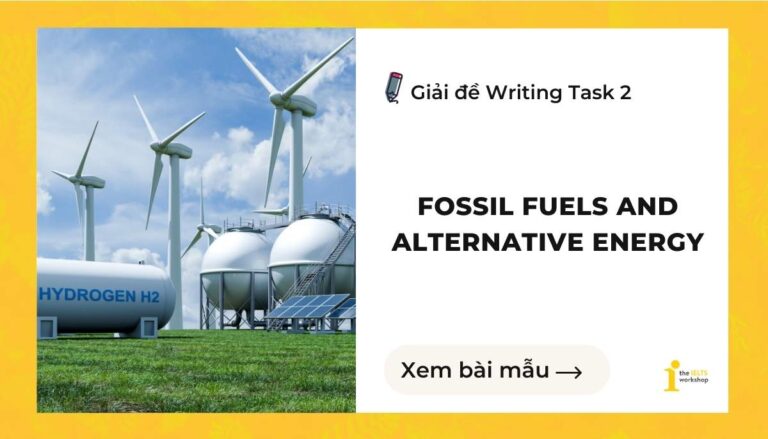
Trong chuyên mục Giải đề IELTS Writing Task 2 tuần này, bạn sẽ cùng thầy Lưu Trọng Đạt từ The IELTS Workshop khám phá cách xử lý đề bài về chủ đề Fossil fuels nhé.
1. Phân tích đề bài
1.1. Đề bài
Fossil fuels, such as coal, oil and natural gas, are the main source for many countries. However, some nations are using alternative energy such as solar power and wind power. Do you think this is a positive or negative development?
(Nhiên liệu hóa thạch như than đá, dầu mỏ và khí tự nhiên là nguồn năng lượng chính của nhiều quốc gia. Tuy nhiên, một số nước đang sử dụng các nguồn năng lượng thay thế như năng lượng mặt trời và năng lượng gió.)
1.2. Phân tích đề bài
Dạng bài: Advantages and Disadvantages
Xem thêm: Cách viết Advantages and Disadvantages essay trong Writing Task 2
Từ khóa chính:
- fossil fuels ~ carbon-based fuels, non-renewable energy sources
- main source ~ dominant energy supply, primary energy backbone
- using alternative energy ~ shifting to renewables, adopting clean energy
Phân tích yêu cầu đề bài: nêu rõ điểm mạnh điểm yếu của việc chuyển dịch sang sử dụng năng lượng tái tạo và chốt lại quan điểm cá nhân. Trong trường hợp này, chúng ta chọn đứng về phe tích tực
- Thân bài 1 – Tiêu cực: tính thất thường và chi phí đầu tư lớn + counter: có thể kiểm soát và chỉ là vấn đề ngắn hạn.
- Thân bài 2 – Tích cực: lợi ích môi trường + kinh tế
1.3. Dàn bài chi tiết
Intro
- Fossil fuels vẫn là nguồn chính ở nhiều nước, nhưng nhiều quốc gia đang chuyển sang solar/wind
- Thesis: overall positive, dù có một số vấn đề ngắn hạn
Body 1: Negative (Counterargument → Refutation)
- Counterargument: chuyển sang renewables là negative vì gây mất ổn định + tăng chi phí
- Support counter 1: intermittency (nắng/gió thất thường) -> rủi ro thiếu điện giờ cao điểm/blackout
- Support counter 2: upfront investment (grid + storage + backup) -> giá điện tăng, áp lực ngân sách
- Refutation: nhưng các vấn đề này kiểm soát được và chỉ là ngắn hạn
- Support refutation 1: diversified mix + smart grid + demand response -> cân bằng cung-cầu, tăng độ ổn định
- Support refutation 2: tech improves + economies of scale -> chi phí giảm dần; fossil fuels còn “hidden costs” (ô nhiễm/sức khỏe/khí hậu)
Body 2: Positive
- Topic sentence: xét tổng thể, đây là positive development vì lợi ích môi trường + chiến lược dài hạn
- Idea 1: Environment/health
- Support 1.1 (Reason): renewables ít phát thải -> giảm greenhouse gas -> giảm tốc biến đổi khí hậu
- Support 1.2: không khí sạch hơn -> giảm bệnh hô hấp + giảm chi phí y tế
- Idea 2: Energy security/economy
- Support 2.1 (Reason): dùng nguồn nội địa -> giảm phụ thuộc nhập khẩu -> tránh sốc giá & rủi ro địa chính trị
- Support 2.2: tạo việc làm xanh + thúc đẩy đổi mới (storage, smart grids, manufacturing)
Conclusion
Nhắc lại: có khó khăn chuyển đổi nhưng lợi ích dài hạn vượt trội -> overall positive
2. Bài mẫu
Many countries still rely on fossil fuels such as coal, oil and natural gas as their main energy source, yet some are shifting to renewable alternatives like solar and wind power. While this transition can create short-term challenges, I believe it is a positive development overall.
Some people argue that moving to renewables is negative because it may undermine reliability and raise costs. Since solar and wind are intermittent, electricity output can fall unexpectedly when weather conditions change, increasing the risk of shortages during peak hours. In addition, the transition often requires substantial upfront investment in grid upgrades, energy storage and backup capacity, which can push up electricity prices and place pressure on public fundings. However, these issues are manageable and largely temporary. With a diversified energy mix, smarter grid management and demand-response programs, countries can balance supply and demand more effectively even when renewable output fluctuates. Moreover, costs tend to decline owing to technological improvements and economies of scale. These factors lead to higher efficiency of batteries and competitiveness of renewables, while fossil fuels carry hidden expenses linked to pollution, public health and climate damage.
Overall, adopting solar and wind power brings significant long-term benefits for the environment and national security. First, renewables generate electricity with lower greenhouse gas emissions, helping to slow climate change and reduce the frequency of costly extreme weather. This also improves air quality, which can lower rates of respiratory illness and reduce healthcare spending, especially in large cities. Second, renewable energy strengthens energy security because it relies on domestic resources rather than imported fuels, protecting countries from global price shocks and geopolitical tensions. At the same time, the green transition can create skilled jobs and stimulate innovation in areas such as storage, smart grids and clean manufacturing.
In conclusion, despite some transitional difficulties, the shift from fossil fuels to solar and wind power is beneficial in the long run.
Sample by Luu Trong Dat– IELTS Teacher at The IELTS Workshop
3. Từ vựng (Vocabulary)
- positive development overall: xu hướng/diễn biến tích cực nhìn chung
- short-term challenges: khó khăn trong ngắn hạn
- reliability: độ ổn định/độ tin cậy (của hệ thống điện)
- intermittent: gián đoạn, thất thường (phụ thuộc thời tiết)
- peak hours: giờ cao điểm
- upfront investment: chi phí đầu tư ban đầu
- grid upgrades: nâng cấp lưới điện
- backup capacity: công suất dự phòng (để bù khi thiếu điện)
- diversified energy mix: cơ cấu nguồn điện đa dạng (không phụ thuộc 1 nguồn)
- demand-response programmes: chương trình điều chỉnh nhu cầu (khuyến khích dùng điện lệch giờ cao điểm)
- economies of scale: lợi thế kinh tế theo quy mô (làm nhiều -> chi phí/đơn vị giảm)
- hidden expenses: chi phí “ẩn” (không thể hiện trực tiếp trên hóa đơn)
- long-term benefits: lợi ích dài hạn
- greenhouse-gas emissions: phát thải khí nhà kính
- slow climate change: làm chậm biến đổi khí hậu
- extreme weather: thời tiết cực đoan
- respiratory illness: bệnh về hô hấp
- energy security: an ninh năng lượng
- price shocks: cú sốc giá (biến động mạnh)
- geopolitical tensions: căng thẳng địa chính trị
- skilled jobs: việc làm yêu cầu tay nghề cao
- innovation: đổi mới sáng tạo
Xem thêm: Tổng hợp 30+ chủ đề từ vựng IELTS thông dụng mà bạn cần biết
Tạm kết
Hy vọng bài viết từ thầy Trọng Đạt đã giúp bạn hình dung rõ cách triển khai ý cho bài IELTS Writing Task 2 dạng Advantages and Disadvantages chủ đề Fossil fuels một cách chặt chẽ và thuyết phục.
Nếu bạn muốn luyện tập thêm các dạng bài tương tự, đừng quên theo dõi chuyên mục [Cập nhật liên tục] Tổng hợp đề thi IELTS Writing 2026 kèm bài mẫu và Bài mẫu Writing Task 2 từ The IELTS Workshop nhé!
Học IELTS ngay tại HỌC IELTS MIỄN PHÍ cùng các thầy cô 9.0 IELTS tại Website của The IELTS Workshop !