Trong chuyên mục Giải đề IELTS Writing Task 2 tuần này, cô Hồng Linh – giáo viên tại The IELTS Workshop sẽ cùng bạn khám phá chủ đề Satellite launches and space debris nhé!
1. Phân tích đề bài
1.1. Đề bài
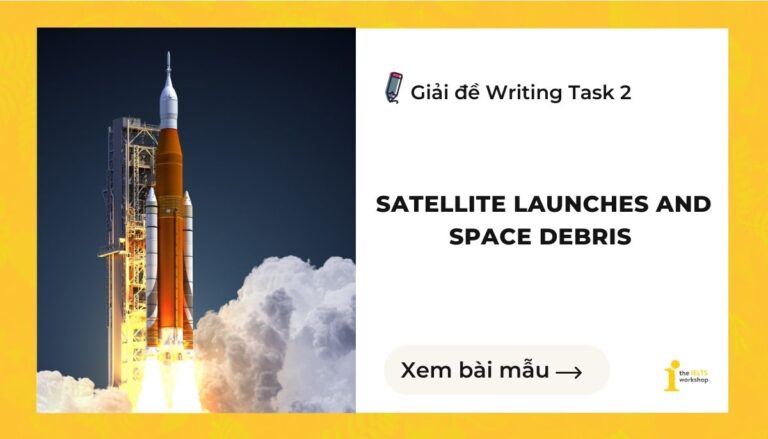
The increasing frequency of satellite launches and space debris is becoming a threat to the Earth. What are the main causes? What measures can be taken to address this?
(Tần suất phóng vệ tinh ngày càng gia tăng cùng với rác thải không gian đang trở thành mối đe dọa đối với Trái Đất. Nguyên nhân chính của vấn đề này là gì? Những biện pháp nào có thể được thực hiện để giải quyết?)
1.2. Phân tích đề bài
Dạng bài: Problem–Solution (Causes and Solutions).
→ Yêu cầu nêu nguyên nhân chính và giải pháp tương ứng
→ KHÔNG yêu cầu nêu quan điểm cá nhân
Xem thêm: Hướng dẫn A-Z cách cách viết Problem and Solution Essay trong IELTS Writing Task 2
Từ khóa:
- Satellite launches: phóng vệ tinh
- Space debris: rác thải vũ trụ, mảnh vỡ từ các vệ tinh, tàu vũ trụ…
- A threat to the Earth: mối đe dọa cho Trái Đất => mối đe dọa do hoạt động không gian của con người gây ra
Từ đồng nghĩa / paraphase:
- Satellite launches = space missions = space launches = orbital deployment
- Space debris = space junk = orbital debris = defunct satellites
- A threat to the Earth = a serious danger = a growing risk = a global concern
- Increase = rapid growth = uncontrolled expansion = rising number
Phân tích yêu cầu đề bài:
- Thân bài 1: phân tích nguyên nhân chính (2–3 nguyên nhân)
- Thân bài 2: đưa ra giải pháp khả thi, liên quan trực tiếp đến nguyên nhân
1.3. Dàn bài chi tiết
Mở bài
- Paraphrase đề bài
- Giới thiệu: bài viết sẽ phân tích nguyên nhân và giải pháp
Thân bài 1 – Causes
- Sự gia tăng nhanh chóng của các vụ phóng vệ tinh
- Vệ tinh hỏng + mảnh vỡ tên lửa không được xử lý
- Thiếu luật quốc tế mang tính ràng buộc
Thân bài 2 – Solutions
- Ban hành quy định quốc tế nghiêm ngặt về phóng và xử lý vệ tinh
- Bắt buộc kế hoạch “end-of-life disposal”
- Đầu tư công nghệ theo dõi và thu gom rác không gian
Kết bài
- Tóm tắt nguyên nhân và giải pháp
2. Bài mẫu
The increasing frequency of satellite launches, together with the growing amount of space debris, is becoming a serious danger to the Earth and its surrounding orbital environment. The main reason for this phenomenon could be the rapid, though poorly controlled, development of space exploration; however, it could be alleviated by a number of remedies from governments and the related organisations.
The main cause of space debris and its dangerous impacts on the Earth could be the rapid expansion of space activities by both governments and private companies. In particular, because of cheaper technologies and increasing demand for global connectivity and navigation, thousands of commercial satellite constellations have been deployed within a short period of time. Many of these satellites eventually become non-functional but remain in orbit for decades, becoming space junk. These defunct space-based objects can collide, creating thousands of smaller fragments. In addition, parts of rockets used during launches, especially the upper stages of them, are often abandoned in space, becoming large debris. This problem of orbital pollution is further aggravated by the lack of strict international regulations, which allows countries and companies to prioritise economic and technological benefits over long-term environmental responsibility.
To deal with this problem, stronger global cooperation is required. First, international organisations should establish legally binding rules that limit unnecessary satellite launches and require operators to submit detailed end-of-life disposal plans. For example, satellites could be designed to safely re-enter the Earth’s atmosphere once they are no longer in use or they could be programmed to fly to designated graveyard orbits. Such measures would significantly reduce the amount of debris left in critical orbital zones, reducing the risk of collisions. Furthermore, governments should invest more in advanced technologies to monitor and remove existing space debris. Systems such as improved tracking networks, robotic capture devices, and controlled de-orbiting techniques could help prevent collisions and slow the growth of debris.
In conclusion, the threat posed by space debris is likely to result from the development of space exploration. However, this phenomenon can be effectively managed through stricter regulations and international cooperation.
Sample by Hong Linh– IELTS Teacher at The IELTS Workshop
3. Vocabulary
- orbital environment: môi trường quỹ đạo
- space exploration: khám phá không gian
- navigation: điều hướng, định hướng
- defunct: ngừng hoạt động
- collide: va chạm, đâm vào nhau
- fragments: mảnh vỡ
- legally binding rules: quy định ràng buộc pháp lý
Xem thêm: Cách học từ vựng IELTS hiệu quả từ thầy Đặng Trần Tùng 9.0
Tạm kết
Mong rằng bài viết mẫu trên đã mang đến cho bạn một góc nhìn toàn diện và cách triển khai mạch lạc cho dạng bài Causes and Solutions trong IELTS Writing Task 2 với chủ đề Satellite launches and space debris.
Đừng quên theo dõi chuyên mục [Cập nhật liên tục] Tổng hợp đề thi IELTS Writing kèm bài mẫu và Bài mẫu Writing Task 2 để củng cố thêm kiến thức và kỹ năng xử lý dạng bài này
Đăng ký ngay HỌC IELTS MIỄN PHÍ tại Website của The IELTS Workshop để luyện tập cùng các giáo viên giàu kinh nghiệm và nhận được hướng dẫn cụ thể hơn nhé!