
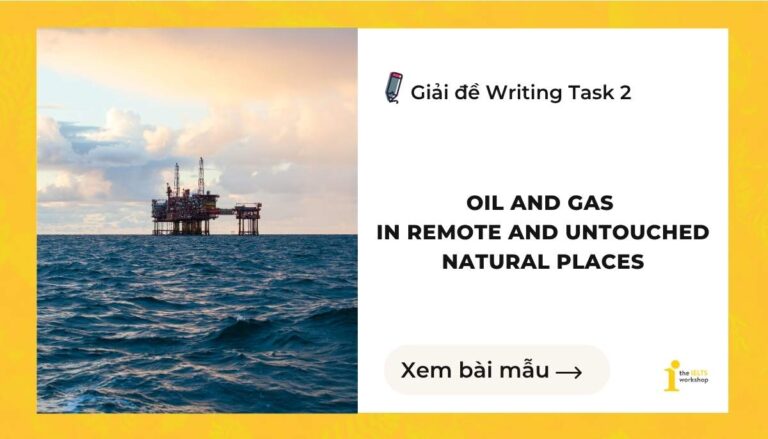
Trong chuyên mục Giải đề IELTS Writing Task 2 tuần này, bạn sẽ cùng cô Mai Linh từ The IELTS Workshop khám phá cách xử lý đề bài về chủ đề oil and gas in remote and untouched natural places trong IELTS Writing Task 2 nhé.
1. Phân tích đề bài
1.1. Đề bài
With the increasing demand for energy sources of oil and gas, people should look for sources of oil and gas in remote and untouched natural places.
Do the advantages outweigh the disadvantages of damaging such areas?
(Với nhu cầu ngày càng tăng đối với các nguồn năng lượng như dầu mỏ và khí đốt, con người nên tìm kiếm các nguồn dầu mỏ và khí đốt ở những vùng thiên nhiên xa xôi, hoang sơ và chưa bị tác động bởi con người. Liệu những lợi ích mà việc khai thác này mang lại có lớn hơn những bất lợi do gây tổn hại đến các khu vực đó hay không?)
1.2. Phân tích đề bài
Dạng bài: Advantages Outweigh Disadvantages Essay.
Đề yêu cầu đánh giá liệu lợi ích của việc khai thác dầu khí tại những khu vực thiên nhiên xa xôi, chưa bị tác động bởi con người có lớn hơn những thiệt hại gây ra hay không.
Đây không đơn thuần là bài Advantages and Disadvantages. Người viết phải đưa ra một đánh giá so sánh rõ ràng, tức là xác định bên nào có sức nặng lớn hơn và giải thích tại sao.
Từ khóa chính
- Increasing demand for energy: nhu cầu năng lượng ngày càng tăng
- Oil and gas: dầu mỏ và khí đốt
- Remote areas: những khu vực xa xôi
- Untouched natural places: các khu vực thiên nhiên nguyên sơ
- Oil and gas exploration: hoạt động thăm dò dầu khí
- Fossil fuel extraction: khai thác nhiên liệu hóa thạch
- Environmental damage: thiệt hại môi trường
- Outweigh: có lợi ích hoặc tác động lớn hơn về mức độ quan trọng
Từ đồng nghĩa, trái nghĩa
- increasing demand = growing demand = rising energy consumption
- oil and gas = fossil fuels = petroleum and natural gas
- remote areas = isolated regions = geographically inaccessible areas
- untouched natural places = pristine environments = unspoilt natural habitats
- explore = search for = prospect for
- extract = exploit = recover
- environmental destruction = ecological damage = habitat degradation
- economic benefits = financial gains = economic advantages
- energy security = a stable energy supply = reduced dependence on energy imports
- short-term benefits >< long-term consequences
- renewable energy >< non-renewable energy
Phân tích yêu cầu đề bài
Có ba yếu tố quan trọng cần xác định.
- Thứ nhất: Đề nói về khai thác dầu khí ở những khu vực nguyên sơ, không phải khai thác dầu khí nói chung.
Vì vậy, nếu chỉ viết rằng dầu khí gây ô nhiễm không khí hoặc tạo ra khí nhà kính, bài có thể chưa khai thác đầy đủ trọng tâm. Cần nhấn mạnh việc xây dựng cơ sở khai thác tại các vùng chưa bị tác động có thể phá hủy những hệ sinh thái đặc biệt nhạy cảm.
- Thứ hai: Đề đặt vấn đề giữa nhu cầu năng lượng và bảo vệ thiên nhiên.
Người viết cần thừa nhận những lợi ích thực tế như:
- Đảm bảo nguồn cung năng lượng.
- Giảm phụ thuộc vào nhập khẩu nhiên liệu.
- Tạo việc làm và tăng nguồn thu kinh tế.
Sau đó, so sánh với các thiệt hại:
- Habitat destruction.
- Biodiversity loss.
- Oil spills and environmental contamination.
- Long-term ecological damage.
- Increased dependence on fossil fuels.
- Thứ ba: Từ “outweigh” yêu cầu sự đánh giá, không chỉ liệt kê.
Ví dụ, nếu chọn disadvantages outweigh advantages, cần giải thích:
- Lợi ích kinh tế và năng lượng có thể xuất hiện tương đối nhanh.
- Thiệt hại đối với các hệ sinh thái nguyên sơ có thể kéo dài hàng thập kỷ hoặc không thể phục hồi hoàn toàn.
- Một phần lợi ích năng lượng có thể đạt được bằng các giải pháp thay thế ít gây hại hơn.
Do đó, những lợi ích trước mắt không đủ để biện minh cho tổn thất môi trường lâu dài.
Hướng lập luận đề xuất: Disadvantages outweigh advantages.
Body 1 – Advantages
Main idea 1: Enhance energy security.
- Khai thác thêm trữ lượng dầu khí giúp tăng nguồn cung.
- Giảm phụ thuộc vào năng lượng nhập khẩu.
- Hỗ trợ các ngành công nghiệp cần nguồn nhiên liệu ổn định.
Main idea 2: Stimulate economic growth.
- Tạo việc làm trong exploration, extraction và transportation.
- Tăng nguồn thu từ thuế và xuất khẩu.
- Hỗ trợ phát triển cơ sở hạ tầng ở những vùng xa xôi.
Ví dụ: Việc phát triển một mỏ dầu mới có thể tạo ra việc làm cho kỹ sư, công nhân và các doanh nghiệp vận tải.
Body 2 – Disadvantages
Main idea 1: Irreversible environmental damage.
- Xây dựng drilling sites, roads và pipelines có thể phá vỡ môi trường sống.
- Oil spills gây ô nhiễm đất và nước.
- Động vật hoang dã mất nơi sinh sống.
- Một số hệ sinh thái rất khó phục hồi sau khi bị phá hủy.
Main idea 2: Prolong fossil fuel dependence.
- Đầu tư vào dầu khí làm chậm quá trình chuyển đổi sang renewable energy.
- Tiếp tục khai thác và đốt nhiên liệu hóa thạch làm tăng greenhouse gas emissions.
- Gây thêm rủi ro môi trường lâu dài.
Ví dụ: Khai thác dầu ở các vùng Bắc Cực có thể gây nguy hiểm cho hệ sinh thái nhạy cảm, trong khi điều kiện khắc nghiệt khiến việc xử lý sự cố tràn dầu trở nên khó khăn.
Xem thêm: Cách viết Advantages and Disadvantages essay trong Writing Task 2
1.3. Dàn bài chi tiết
Mở bài
- Paraphrase: The growing global demand for energy has prompted proposals to explore oil and gas reserves in remote, previously undisturbed natural areas.
- Thesis statement: Although such exploration could strengthen energy security and generate economic benefits, I believe the long-term environmental consequences far outweigh these advantages.
Đoạn thân bài 1 – Advantages
Topic sentence: Exploring previously untouched regions for oil and gas could bring considerable economic and energy-related benefits.
Idea 1:
- Increase domestic energy production.
- Reduce reliance on imported fuels.
- Ensure a stable energy supply.
Idea 2:
- Generate employment.
- Attract investment.
- Increase government revenue.
Development: Nhu cầu dầu khí hiện vẫn tồn tại trong transportation, manufacturing và nhiều lĩnh vực công nghiệp. Việc khai thác nguồn dự trữ mới có thể giúp duy trì hoạt động kinh tế.
Đoạn thân bài 2 – Disadvantages
Topic sentence: Nevertheless, the environmental costs of exploiting pristine natural environments are far more serious and potentially irreversible.
Idea 1:
- Destroy natural habitats.
- Threaten biodiversity.
- Contaminate ecosystems through oil spills.
Development: Những khu vực chưa bị khai thác thường có hệ sinh thái ít chịu tác động từ con người. Việc xây dựng cơ sở hạ tầng và vận hành hoạt động khoan dầu có thể gây ra những thay đổi lâu dài, thậm chí không thể đảo ngược.
Idea 2:
- Increase dependence on fossil fuels.
- Contribute to greenhouse gas emissions.
- Delay investment in renewable energy.
Evaluation: Những lợi ích kinh tế có thể đạt được trong ngắn hạn, nhưng thiệt hại môi trường có thể kéo dài qua nhiều thế hệ, khiến disadvantages outweigh advantages.
Kết bài
- Thừa nhận energy security và economic growth.
- Khẳng định environmental damage có sức nặng lớn hơn.
- Đề xuất renewable energy và energy efficiency là những hướng phát triển bền vững hơn.
2. Bài mẫu
The growing global demand for energy has prompted proposals to explore oil and gas reserves in remote, previously undisturbed natural areas. Although such exploration could strengthen energy security and generate economic benefits, I believe the long-term environmental consequences far outweigh these advantages.
On the one hand, extracting oil and gas from previously untouched regions could offer significant economic and energy-related benefits. One major advantage is that discovering new fossil fuel reserves can help countries meet their growing energy demands, reducing their dependence on imported fuels and ensuring a more stable energy supply. This is particularly important for nations whose manufacturing and transportation sectors rely heavily on conventional energy sources. Furthermore, oil and gas exploration can create employment opportunities and generate substantial government revenue. For example, developing new extraction sites requires engineers, construction workers and transportation services, stimulating economic activity and supporting infrastructure development in remote regions.
On the other hand, the environmental consequences of exploiting pristine natural areas are considerably more serious. First, constructing drilling facilities, pipelines and access roads can destroy natural habitats, threatening biodiversity and disrupting fragile ecosystems that may take decades to recover. In addition, accidental oil spills can contaminate surrounding land and water, causing long-lasting damage to wildlife and natural resources. This is particularly concerning in environmentally sensitive regions such as the Arctic, where harsh conditions make environmental restoration extremely difficult. More importantly, expanding fossil fuel exploration encourages continued dependence on fossil fuels, potentially delaying the transition towards cleaner alternatives. Rather than investing heavily in new oil and gas projects, governments could prioritise renewable energy technologies and energy efficiency, reducing environmental damage while addressing long-term energy needs.
In conclusion, although exploring remote regions for oil and gas could improve energy security and stimulate economic growth, these benefits are outweighed by the potentially irreversible destruction of natural ecosystems and the continued reliance on fossil fuels. Protecting untouched environments while investing in sustainable energy alternatives would therefore be a more responsible approach to meeting future energy demands.
Sample by Mai Linh– IELTS Teacher at The IELTS Workshop
3. Từ vựng (Vocabulary)
- Growing global demand for energy = nhu cầu năng lượng toàn cầu ngày càng tăng
- Explore oil and gas reserves = thăm dò trữ lượng dầu khí
- Previously undisturbed natural areas = những khu vực thiên nhiên trước đây chưa bị tác động
- Strengthen energy security = tăng cường an ninh năng lượng
- Generate economic benefits = tạo ra lợi ích kinh tế
- Long-term environmental consequences = hậu quả môi trường lâu dài
- Extract oil and gas = khai thác dầu khí
- Meet growing energy demands = đáp ứng nhu cầu năng lượng ngày càng tăng
- Reduce dependence on imported fuels = giảm sự phụ thuộc vào nhiên liệu nhập khẩu
- Ensure a stable energy supply = đảm bảo nguồn cung năng lượng ổn định
- Conventional energy sources = các nguồn năng lượng truyền thống
- Generate substantial government revenue = tạo ra nguồn thu đáng kể cho chính phủ
- Stimulate economic activity = thúc đẩy hoạt động kinh tế
- Pristine natural areas = những khu vực thiên nhiên nguyên sơ
- Construct drilling facilities = xây dựng cơ sở khoan dầu
- Destroy natural habitats = phá hủy môi trường sống tự nhiên
- Threaten biodiversity = đe dọa đa dạng sinh học
- Disrupt fragile ecosystems = phá vỡ các hệ sinh thái mong manh
- Accidental oil spills = sự cố tràn dầu
- Contaminate surrounding land and water = làm ô nhiễm đất và nước xung quanh
- Environmental restoration = phục hồi môi trường
- Continued dependence on fossil fuels = sự phụ thuộc kéo dài vào nhiên liệu hóa thạch
- Delay the transition towards cleaner alternatives = trì hoãn quá trình chuyển đổi sang các giải pháp năng lượng sạch hơn
- Prioritise renewable energy technologies = ưu tiên công nghệ năng lượng tái tạo
- Potentially irreversible destruction = sự phá hủy có thể không thể đảo ngược
- Sustainable energy alternatives = các giải pháp năng lượng thay thế bền vững
Xem thêm: Tổng hợp 30+ chủ đề từ vựng IELTS thông dụng mà bạn cần biết
Tạm kết
Hy vọng bài viết từ cô Mai Linh đã giúp bạn hình dung rõ cách triển khai ý cho bài IELTS Writing Task 2 dạng advantages and disadvantages chủ đề Oil and gas in remote and untouched natural places một cách chặt chẽ và thuyết phục.
Nếu bạn muốn luyện tập thêm các dạng bài tương tự, đừng quên theo dõi chuyên mục [Cập nhật liên tục] Tổng hợp đề thi IELTS Writing 2026 kèm bài mẫu và Bài mẫu Writing Task 2 từ The IELTS Workshop nhé!
Học IELTS ngay tại HỌC IELTS MIỄN PHÍ cùng các thầy cô 9.0 IELTS tại Website của The IELTS Workshop !