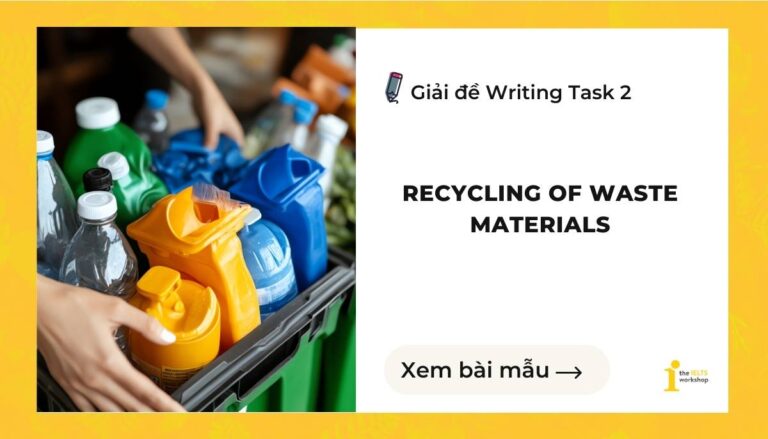
Trong chuyên mục Giải đề IELTS Writing Task 2 tuần này, cô Mai Linh – giáo viên tại The IELTS Workshop sẽ cùng bạn khám phá chủ đề Recycling of waste materials nhé!
1. Phân tích đề bài
1.1. Đề bài
In some countries, there is not enough recycling of waste materials (e.g. paper, glass, and cans). What are the reasons and solutions?
(Ở một số quốc gia, việc tái chế các vật liệu thải (ví dụ như giấy, thủy tinh và lon kim loại) vẫn chưa được thực hiện đầy đủ. Nguyên nhân của vấn đề này là gì và đâu là những giải pháp có thể áp dụng?)
1.2. Phân tích đề bài
Dạng bài: Problem–Solution (Causes and Solutions).
Từ khóa:
- not enough recycling = low recycling rates = insufficient recycling = poor recycling participation
- waste materials = household waste = solid waste = recyclable waste
- paper, glass, cans = packaging waste = recyclable packaging
- reasons = causes = contributing factors
- solutions = measures = interventions = policy responses
Từ trái nghĩa / hướng đối lập để viết:
- high recycling rates, effective recycling system, strong recycling culture
- reduce waste, reuse materials, circular economy
Phân tích yêu cầu đề bài:
Đề yêu cầu nêu:
(1) các nguyên nhân khiến tái chế thấp ở một số quốc gia
(2) giải pháp khả thi. Bài nên triển khai 2 thân bài:
- Body 1 nêu nguyên nhân theo nhóm (hệ thống, hành vi, kinh tế),
- Body 2 đưa giải pháp tương ứng (chính sách, hạ tầng, khuyến khích, giáo dục).
1.3. Dàn bài chi tiết
Mở bài
- Paraphrase đề: nhiều nước có tỷ lệ tái chế thấp đối với giấy, thủy tinh, lon.
- Nêu định hướng: nguyên nhân chủ yếu đến từ hạ tầng và động lực hành vi; giải pháp cần kết hợp chính sách và thay đổi thói quen.
Thân bài 1: Reasons (Nguyên nhân)
- Lý do 1 (Hạ tầng): thiếu hệ thống phân loại và thu gom thuận tiện; thiếu điểm tập kết, thiếu thùng rác phân loại.
- Lý do 2 (Kinh tế): tái chế đắt hơn chôn lấp/đốt; thị trường đầu ra cho vật liệu tái chế yếu; giá nguyên liệu mới rẻ.
- Lý do 3 (Hành vi/nhận thức): người dân không thấy lợi ích trực tiếp; thiếu kiến thức phân loại; “phiền” và mất thời gian.
Thân bài 2: Solutions (Giải pháp)
- Giải pháp 1 (Chính sách + động lực): áp dụng deposit-return scheme cho chai/lon; pay-as-you-throw; phạt xả rác sai quy định.
- Giải pháp 2 (Trách nhiệm nhà sản xuất): Extended Producer Responsibility (EPR) buộc doanh nghiệp trả phí/thu hồi bao bì, thiết kế dễ tái chế.
- Giải pháp 3 (Hạ tầng + truyền thông): đầu tư thu gom phân loại, lịch thu gom rõ ràng; hướng dẫn đơn giản; giáo dục ở trường và chiến dịch cộng đồng.
Kết bài
- Tóm tắt nguyên nhân chính.
- Khẳng định: kết hợp hạ tầng + chính sách khuyến khích + EPR sẽ tăng tỷ lệ tái chế bền vững.
Xem thêm: Hướng dẫn A-Z cách cách viết Problem and Solution Essay trong IELTS Writing Task 2
2. Bài mẫu
Many countries still struggle with low recycling rates for common waste such as paper, glass, and cans. This problem is mainly caused by inadequate collection systems and weak incentives for households and businesses. However, a combination of policy measures and infrastructure investment can significantly improve the situation.
One major reason is the lack of convenient recycling facilities. In places where separate bins are not widely available or collection schedules are unclear, people tend to throw all rubbish into a single container. In addition, recycling can be economically unattractive. If landfill fees are cheap and virgin materials remain affordable, companies have little motivation to process recyclables, resulting in a weak market for recycled products. Finally, public awareness is often limited. Many residents do not know how to sort waste correctly, or they consider recycling time-consuming and unnecessary.
To address these issues, governments should introduce stronger financial incentives and regulations. A deposit-return scheme for bottles and cans, for example, encourages consumers to return containers instead of discarding them. Authorities can also apply pay-as-you-throw policies, which charge households based on the amount of non-recyclable waste they produce. Another effective solution is to strengthen extended producer responsibility (EPR), requiring manufacturers to fund the collection and recycling of packaging and to design products that are easier to recycle. At the same time, investment in clearly labeled bins, reliable collection services, and simple public campaigns would make recycling more accessible and reduce confusion.
In conclusion, insufficient recycling is driven by poor infrastructure, unfavorable economics, and low awareness. With well-designed incentives, producer responsibility, and better collection systems, recycling rates can rise substantially.
Sample by Nguyễn Mai Linh– IELTS Teacher at The IELTS Workshop
3. Vocabulary
- low recycling rates: tỷ lệ tái chế thấp
- inadequate collection systems: hệ thống thu gom chưa đủ tốt
- convenient recycling facilities: cơ sở/điểm tái chế thuận tiện
- virgin materials: nguyên liệu thô mới
- financial incentives: động lực tài chính
- deposit-return scheme: cơ chế đặt cọc hoàn tiền
- pay-as-you-throw: trả phí theo lượng rác thải
- extended producer responsibility (EPR): trách nhiệm mở rộng của nhà sản xuất
- clearly labeled bins: thùng rác có nhãn rõ ràng
- public campaigns: chiến dịch truyền thông cộng đồng
4. Vocabulary tham khảo
- waste segregation
Meaning: phân loại rác tại nguồn
Example: Waste segregation is essential for an effective recycling system. - landfill dependency
Meaning: phụ thuộc vào chôn lấp
Example: Landfill dependency discourages investment in recycling. - recycling contamination
Meaning: rác tái chế bị lẫn bẩn (làm giảm khả năng tái chế)
Example: Recycling contamination happens when food waste is mixed with paper. - circular economy
Meaning: kinh tế tuần hoàn
Example: Recycling supports a circular economy by keeping materials in use longer. - enforcement measures
Meaning: biện pháp thực thi (phạt/kiểm soát)
Example: Enforcement measures can raise compliance with recycling rules.
Xem thêm: Cách học từ vựng IELTS hiệu quả từ thầy Đặng Trần Tùng 9.0
Tạm kết
Mong rằng bài viết mẫu trên đã mang đến cho bạn một góc nhìn toàn diện và cách triển khai mạch lạc cho dạng bài Problems and Solutions trong IELTS Writing Task 2 với chủ đề Recycling of waste materials.
Đừng quên theo dõi chuyên mục [Cập nhật liên tục] Tổng hợp đề thi IELTS Writing 2025 kèm bài mẫu và Bài mẫu Writing Task 2 để củng cố thêm kiến thức và kỹ năng xử lý dạng bài này
Đăng ký ngay HỌC IELTS MIỄN PHÍ tại Website của The IELTS Workshop để luyện tập cùng các giáo viên giàu kinh nghiệm và nhận được hướng dẫn cụ thể hơn nhé!