Trong chuyên mục Giải đề IELTS Writing Task 2 tuần này, bạn sẽ cùng thầy Dương Tuấn Sơn từ The IELTS Workshop khám phá cách xử lý đề bài về chủ đề traditional food is gradually being replaced by fast food trong IELTS Writing Task 2 nhé.
1. Phân tích đề bài
1.1. Đề bài
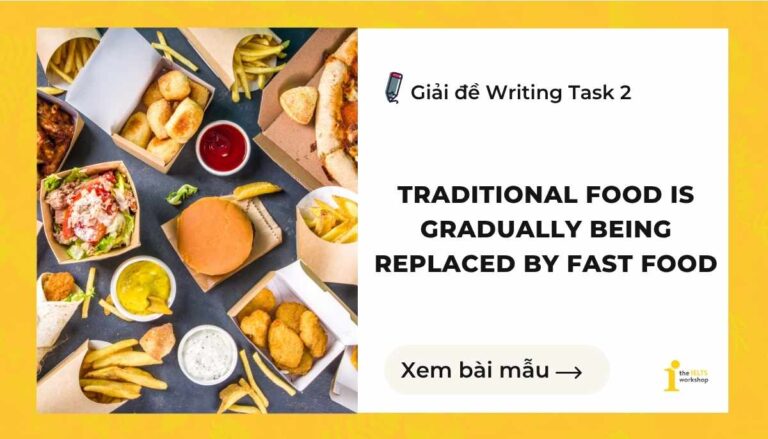
In some parts of the world, traditional food is gradually being replaced by fast food, and this trend is having a negative effect on families and society. To what extent do you agree or disagree with this belief?
(Ở một số nơi trên thế giới, thực phẩm truyền thống đang dần bị thay thế bởi thức ăn nhanh, và xu hướng này đang gây ra những tác động tiêu cực đối với gia đình và xã hội. Bạn đồng ý hay không đồng ý đến mức độ nào với quan điểm này?)
1.2. Phân tích đề bài
Dạng bài: Opinion essay (To what extent do you agree or disagree?)
Từ khóa chính:
- traditional food = traditional cuisine = home-cooked meals = local dishes
- fast food = convenience food = ready-made meals = takeaway food
- gradually being replaced = increasingly substituted by = becoming less common than
- negative effect = harmful impact = adverse consequences = detrimental influence
- families = households = family members
- society = the community = the public
Phân tích yêu cầu đề bài :
- Đề bài đưa ra quan điểm rằng việc thức ăn nhanh dần thay thế món ăn truyền thống đang gây ra những tác động tiêu cực đối với gia đình và xã hội.
- Trong bài mẫu này, thầy chọn hướng đồng tình hoàn toàn.
Lập luận sẽ được triển khai như sau:
- Body 3: Thừa nhận lợi ích của fast food nhưng khẳng định những lợi ích này không đủ để bù đắp các hậu quả lâu dài.
- Body 1: Phân tích tác động tiêu cực đối với gia đình (giảm sự gắn kết giữa các thành viên).
- Body 2: Phân tích tác động tiêu cực đối với xã hội (sức khỏe cộng đồng và mai một văn hóa ẩm thực).
Xem thêm: Hướng dẫn A-Z cách viết dạng Discuss both views
1.3. Dàn bài chi tiết
Mở bài
- Paraphrase chủ đề
- Nêu luận điểm cá nhân
Body Paragraph 1: Single-idea paragraph
- Việc thay thế món ăn truyền thống bằng fast food làm suy giảm sự gắn kết giữa các thành viên trong gia đình.
- Lấy ví dụ: Bữa cơm truyền thống
- mọi người cùng chuẩn bị
- cùng ăn
- chia sẻ câu chuyện hằng ngày
- gắn kết tình cảm
- So sánh với Fast food à ăn nhanh à mỗi người ăn vào thời điểm khác nhau à ít giao tiếp
- Example
- Gia đình mua đồ ăn mang về
- Cha mẹ và con cái ăn riêng theo lịch trình
- Result: Giảm tương tác trực tiếp + khiến khoảng cách tình cảm ngày càng lớn
Body Paragraph 2: Ảnh hưởng đến xã hội
- Point 1: Fast food gây ảnh hưởng tiêu cực đến sức khỏe cộng đồng.
- Explain: Fast food có hàm lượng muối, đường, và chất béo cao, đồng thời ít dinh dưỡng
- Result: nếu ăn thường xuyên sẽ dẫn đến các vấn đề sức khỏe nghiêm trọng như béo phì / tiểu đường / bệnh tim mạch è hệ quả lớn hơn là gây ap lực cho hệ thống y tế
- Point 2: Fast food làm mai một văn hóa ẩm thực truyền thống.
- Explain: Món ăn truyền thống phản ánh lịch sử và bản sắc văn hóa và được truyền từ thế hệ này sang thế hệ khác
- Đưa ra giả định: Nếu giới trẻ lựa chọn các chuỗi đồ ăn nhanh quốc tế thay vì học nấu các món truyền thống à nhiều món ăn địa phương biến mất
- Result: suy giảm bản sắc văn hóa
- Explain: Món ăn truyền thống phản ánh lịch sử và bản sắc văn hóa và được truyền từ thế hệ này sang thế hệ khác
Kết bài: Khẳng định lại quan điểm
Mặc dù fast food mang lại sự tiện lợi, nhưng những tác động tiêu cực đối với gia đình, sức khỏe cộng đồng và việc bảo tồn văn hóa lớn hơn rất nhiều. Vì vậy, tôi phần lớn đồng ý rằng đây là một xu hướng tiêu cực.
2. Bài mẫu
In many countries, traditional dishes are gradually being replaced by fast food as people’s lifestyles become increasingly busy. This leads to the belief that this change has harmful consequences for both families and society. I completely agree with this view because this tendency can weaken family relationships and contribute to long-term health and cultural problems.
One of the most significant drawbacks of replacing traditional food with fast food is its effect on family life. Preparing traditional meals often requires planning, cooperation and time, making cooking and eating together an important opportunity for family members to interact. During these shared meals, parents and children naturally discuss their daily experiences, which strengthen emotional bonds and pass on family traditions. By contrast, fast food is designed for speed and convenience. Instead of sitting down for a home-cooked dinner, family members may simply purchase takeaway meals and eat separately whenever it suits their schedules. While this may save time in the short term, it gradually reduces meaningful face-to-face communication. As a result, family members can become emotionally distant despite living under the same roof.
Beyond its impact on families, this dietary shift also creates broader social challenges. From a public health perspective, many fast-food meals contain excessive amounts of salt, sugar, and saturated fat while offering relatively little nutritional value. As these meals become a regular part of people’s diets, health problems such as obesity, diabetes and cardiovascular disease are more likely to rise, placing huge pressure on healthcare systems. Equally concerned is the gradual erosion of culinary heritage. Traditional recipes often reflect a country’s history, local ingredients and cultural identity, and they are typically passed down from one generation to the next through home cooking. If younger people become accustomed to eating at international fast-food chains instead of learning these recipes, many local dishes may eventually disappear. This would represent not only a loss of gastronomic diversity but also a weakening of cultural identity.
In conclusion, although fast food serves a practical purpose in today’s fast-paced society, I believe its growing dominance over traditional cuisine is, on balance, a negative development. The convenience it offers is ultimately outweighed by its harmful effects on family relationships, public health, and the preservation of cultural heritage.
Sample by Duong Tuan Son– IELTS Teacher at The IELTS Workshop
3. Từ vựng (Vocabulary)
- strengthen emotional bonds: củng cố mối gắn kết tình cảm
- pass on family traditions: truyền lại truyền thống gia đình
- meaningful face-to-face communication: sự giao tiếp trực tiếp có ý nghĩa
- takeaway meals: đồ ăn mang đi / bữa ăn mua mang về
- become emotionally distant: trở nên xa cách về mặt tình cảm
- dietary shift: sự thay đổi trong chế độ ăn uống
- offer relatively little nutritional value: cung cấp tương đối ít giá trị dinh dưỡng
- cardiovascular disease: bệnh tim mạch
- place increasing pressure on healthcare systems: gây áp lực ngày càng lớn lên hệ thống y tế
- erosion of culinary heritage: sự mai một của di sản ẩm thực
- become accustomed to: trở nên quen với
- gastronomic diversity: sự đa dạng ẩm thực
- the preservation of cultural heritage: việc bảo tồn di sản văn hóa
Xem thêm: Tổng hợp 30+ chủ đề từ vựng IELTS thông dụng mà bạn cần biết
Tạm kết
Hy vọng bài viết từ thầy Dương Tuấn Sơn đã giúp bạn hình dung rõ cách triển khai ý cho bài IELTS Writing Task 2 dạng Opinion chủ đề Traditional food is gradually being replaced by fast food một cách chặt chẽ và thuyết phục.
Nếu bạn muốn luyện tập thêm các dạng bài tương tự, đừng quên theo dõi chuyên mục [Cập nhật liên tục] Tổng hợp đề thi IELTS Writing 2026 kèm bài mẫu và Bài mẫu Writing Task 2 từ The IELTS Workshop nhé!
Học IELTS ngay tại HỌC IELTS MIỄN PHÍ cùng các thầy cô 9.0 IELTS tại Website của The IELTS Workshop !