Trong chuyên mục Giải đề IELTS Writing Task 2 tuần này, bạn sẽ cùng thầy Nguyễn Tuấn Ngọc từ The IELTS Workshop khám phá cách xử lý đề bài về chủ đề developments in the field of information technology (IT) trong IELTS Writing Task 2 nhé.
1. Phân tích đề bài
1.1. Đề bài
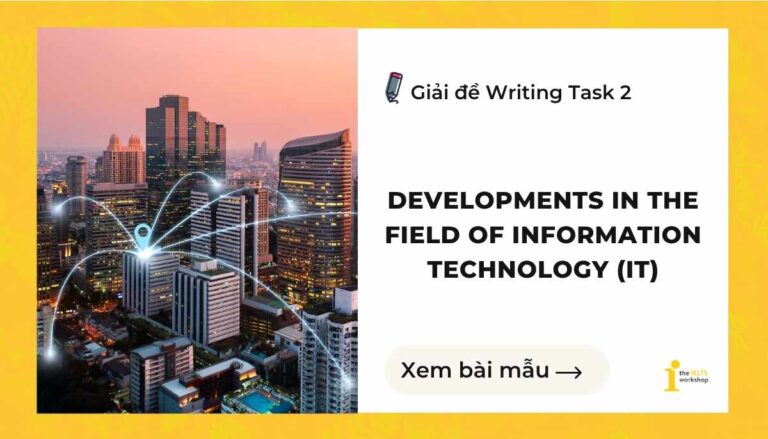
In the last 20 years there have been significant developments in the field of information technology (IT), for example the World Wide Web and communication by email. However, these developments in IT are likely to have more negative effects than positive in the future.
To what extent do you agree with this view?
(Trong 20 năm qua, lĩnh vực công nghệ thông tin (IT) đã có những bước phát triển đáng kể, chẳng hạn như World Wide Web (mạng lưới toàn cầu) và hình thức liên lạc qua email. Tuy nhiên, những phát triển trong lĩnh vực IT này được cho là sẽ gây ra nhiều tác động tiêu cực hơn là tích cực trong tương lai. Bạn đồng ý với quan điểm này ở mức độ nào?)
1.2. Phân tích đề bài
Dạng bài: Opinion essay / Agree or Disagree (Đồng ý hay Không đồng ý)
Từ khóa chính:
- Information technology (IT)/Significant developments/ The World Wide Web / email
- Negative effects/Positive effects / In the future
Yêu cầu đề bài:
- Đề hỏi liệu những phát triển trong IT có gây ra nhiều tác động tiêu cực hơn tích cực trong tương lai hay không.
- Cần đưa ra quan điểm rõ ràng: Agree / Disagree.
- Nếu Disagree:
- Body 1: Thừa nhận các tác động tiêu cực + giải thích vì sao chúng có thể được kiểm soát.
- Body 2: Phân tích các lợi ích lớn hơn của IT + giải thích vì sao chúng outweigh những tác hại.
Xem thêm: Cách làm dạng Opinion essay IELTS Writing task 2
1.3. Dàn bài chi tiết
Body 1: Tác động tiêu cực
- Misinformation
- Dễ đăng tải thông tin → tin giả lan nhanh.
- → Gây nhầm lẫn, hoảng loạn.
- Cybercrime
- Email/websites bị lợi dụng → scams, phishing.
- → Mất thông tin cá nhân/tài chính.
- Tuy nhiên: Có thể kiểm soát
- Chính phủ → regulations.
- Công ty → cybersecurity.
- Người dùng → digital literacy.
- → Tác hại có thật nhưng có thể quản lý.
Body 2: Tác động tích cực
- Communication & business
- Giao tiếp tức thì, không bị giới hạn bởi khoảng cách.
- → Doanh nghiệp tiếp cận thị trường quốc tế, quản lý toàn cầu hiệu quả.
- Education
- Học online, tiếp cận đại học quốc tế.
- → Mở rộng kiến thức + cơ hội nghề nghiệp.
- Personal relationships
- → Duy trì quan hệ với gia đình/bạn bè ở xa.
- Access to information
- Online libraries, journals, learning platforms.
- → Hiểu biết tốt hơn → quyết định hợp lý hơn.
- → Nhận thức xã hội cao hơn → đóng góp cho xã hội.
Kết bài
- Lợi ích rộng và lâu dài hơn → IT sẽ có tác động tích cực hơn trong tương lai.
- Tác hại: misinformation + cybercrime → Có thể giảm thiểu bằng regulation + cybersecurity + education.
2. Bài mẫu
Over the past two decades, information technology has transformed the way people communicate, work and learn. Among the most influential developments are the World Wide Web and email, both of which have made information more accessible than ever before. Although these technologies have created certain challenges, I disagree that they are likely to have more negative than positive effects in the future because their benefits to communication, education and economic development far outweigh their drawbacks.
Admittedly, the widespread use of the Internet is not without its disadvantages. Because online content can be published with minimal oversight, false information can spread rapidly, potentially causing confusion or even panic, particularly during emergencies. In addition, cybercriminals increasingly exploit emails and websites to steal sensitive personal or financial information through scams and phishing attacks. Nevertheless, these problems arise primarily from the misuse of technology rather than the technology itself. Governments and technology companies are continually strengthening cybersecurity systems and introducing stricter regulations to combat online fraud and protect users’ data. At the same time, improved digital literacy education enables people to evaluate online information more critically and recognise potential cyber threats before becoming victims. Consequently, while these risks are genuine, they can be effectively managed without undermining the substantial advantages that the Internet and email continue to offer.
Nevertheless, the Internet and email bring far greater benefits to individuals and society, particularly in terms of communication, education and economic development. Perhaps the greatest advantage of the Internet and email is that they enable people to communicate and exchange information almost instantly, regardless of geographical distance. This has created unprecedented opportunities for businesses, many of which can now enter international markets and manage global operations with remarkable efficiency. Similarly, students are no longer restricted to educational institutions in their own countries, as they can enrol in online programmes offered by world-renowned universities, thereby expanding both their knowledge and future career prospects. On a personal level, digital communication also allows families and friends to maintain close relationships despite living thousands of kilometres apart. More importantly, the Internet has dramatically expanded access to educational resources through online libraries, academic journals and learning platforms. As a result, people are better informed, enabling them to make more rational decisions in both their personal and professional lives. Greater public access to knowledge can also raise awareness of pressing social issues, encouraging citizens to take action and contribute to positive societal change.
In conclusion, although the Internet and email present challenges such as misinformation and cybercrime, I believe these issues are largely manageable through stronger regulation, improved cybersecurity and better public education. Therefore, I remain convinced that these technological developments will continue to have an overwhelmingly positive impact on individuals and society in the years to come.
Sample by Nguyen Tuan Ngoc – IELTS Teacher at The IELTS Workshop
3. Từ vựng (Vocabulary)
- transform the way people communicate: thay đổi cách con người giao tiếp
- make information more accessible: khiến thông tin trở nên dễ tiếp cận hơn
- false information can spread rapidly: thông tin sai lệch có thể lan truyền nhanh chóng
- cause confusion or even panic: gây ra sự hoang mang hoặc thậm chí hoảng loạn
- steal sensitive personal or financial information: đánh cắp thông tin cá nhân hoặc tài chính nhạy cảm
- enter international markets: thâm nhập thị trường quốc tế
- manage global operations with remarkable efficiency: quản lý hoạt động toàn cầu với hiệu quả đáng kể
- be no longer restricted to: không còn bị giới hạn bởi
- dramatically expand access to educational resources: mở rộng đáng kể khả năng tiếp cận các nguồn tài liệu giáo dục
- raise awareness of pressing social issues: nâng cao nhận thức về những vấn đề xã hội cấp bách
Xem thêm: Tổng hợp 30+ chủ đề từ vựng IELTS thông dụng mà bạn cần biết
Tạm kết
Hy vọng bài viết từ thầy Tuấn Ngọc đã giúp bạn hình dung rõ cách triển khai ý cho bài IELTS Writing Task 2 dạng opinion chủ đề Developments in the field of information technology (IT) một cách chặt chẽ và thuyết phục.
Nếu bạn muốn luyện tập thêm các dạng bài tương tự, đừng quên theo dõi chuyên mục [Cập nhật liên tục] Tổng hợp đề thi IELTS Writing 2026 kèm bài mẫu và Bài mẫu Writing Task 2 từ The IELTS Workshop nhé!
Học IELTS ngay tại HỌC IELTS MIỄN PHÍ cùng các thầy cô 9.0 IELTS tại Website của The IELTS Workshop !