Trong chuyên mục Giải đề IELTS Writing Task 2 tuần này, bạn sẽ cùng cô Bảo Vi từ The IELTS Workshop khám phá cách xử lý đề bài về chủ đề Responsibility for pollution nhé.
1. Phân tích đề bài
1.1. Đề bài
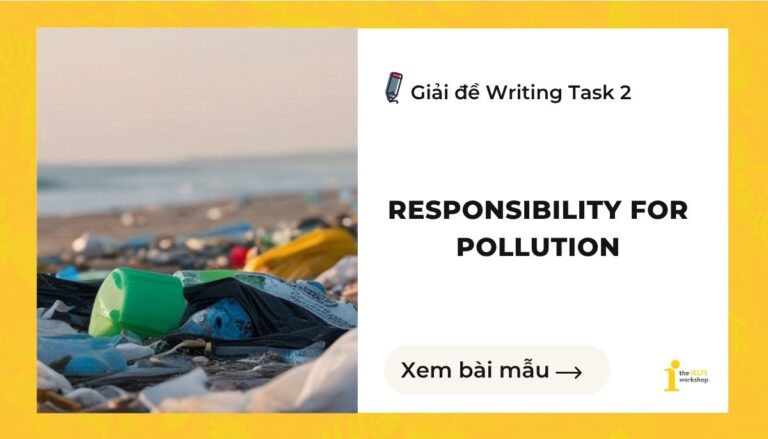
Research show that transportation of products and people is now one of the biggest sources of pollution worldwide. Some people think it is the responsibility of governments to solve this problem, while others think it is the responsibility of individuals. Discuss both views and give your opinion.
(Nghiên cứu cho thấy rằng việc vận chuyển hàng hóa và con người hiện nay là một trong những nguồn gây ô nhiễm lớn nhất trên toàn thế giới. Một số người cho rằng trách nhiệm giải quyết vấn đề này thuộc về chính phủ, trong khi những người khác lại cho rằng đó là trách nhiệm của mỗi cá nhân. Hãy thảo luận cả hai quan điểm và đưa ra ý kiến của bạn.)
1.2. Phân tích đề bài
Dạng bài: Discuss both views and give your opinion
Đề bài yêu cầu bàn luận về hai ý kiến trái ngược. Một bên cho rằng chính phủ cần phải chịu trách nhiệm giải quyết vấn đề trong khi bên còn lại cho rằng trách nhiệm đó thuộc về các cá nhân. Sau khi bàn luận hai ý kiến trên, người viết cần đưa ra quan điểm cá nhân của mình.
Từ khoá chính: transportation of products, people, biggest sources of pollution, responsibility, governments, individuals.
Xem thêm: Hướng dẫn chi tiết cách viết dạng bài Opinion trong IELTS Writing task 2
1.3. Dàn bài chi tiết
Introduction (Mở bài): Paraphrase đề bài và đưa ra quan điểm.
Body 1 (Thân bài 1): Discuss quan điểm thứ nhất – Trách nhiệm thuộc về Government
- Point 1: Government là cơ quan nhà nước có quyền lực và nguồn tài chính lớn nên có thể giải quyết vấn đề trên quy mô lớn, đem lại hiệu quả cao.
- Explanation: Government có thể ban hành các quy định quản lý việc sử dụng nhiên liệu, hạn chế các phương tiện có nguy cơ gây ô nhiễm cao, và phát triển hạ tầng giao thông để hỗ trợ giảm thiểu ô nhiễm. → Do mang tính bắt buộc và được đưa ra bởi cơ quan pháp quyền, các chính sách này sẽ đem lại hiệu quả hơn.
- Example: Chính phủ giới hạn thời gian vận chuyển hàng hoá đối với các xe hàng to tốn nhiều nhiên liệu, quy định về một số điểm trong thành phố chỉ sử dụng xe điện. Chính phủ đầu tư phát triển hệ thống giao thông công cộng, phương tiện xanh.
Body 2 (Thân bài 2): Discuss quan điểm thứ hai – Trách nhiệm thuộc về Individuals
- Point 2: Các cá nhân có trách nhiệm bởi ô nhiễm một phần lớn do chính con người gây ra.
- Explanation: Khi nhiều người cùng nhau chung tay thực hiện, kết quả đem lại sẽ rõ rệt và có tác động tích cực đáng kể tới môi trường.
- Example: Mọi người có thể di chuyển bằng phương tiện công cộng thay vì phương tiện cá nhân. Mọi người có thể thay đổi thói quen tiêu dùng của mình để giảm thiểu lượng rác thải công nghiệp không cần thiết.
Conclusion (Kết luận): Summarize – khái quát lại các ý chính đã nêu trong bài và khẳng định lại quan điểm của mình.
2. Bài mẫu
Research suggests that transporting goods and people has become a prominent source leading to pollution worldwide. While some people believe governments are responsible for addressing this issue, others argue that it is individuals who have to take responsibility. Although both perspectives are valid, I believe that this environmental issue can only be effectively addressed through the combined efforts of both parties.
On the one hand, many people believe that governments should bear responsibility for addressing environmental pollution due to their legislative authority and financial capability. First, governments are the only bodies capable of implementing environmental regulations on a nationwide scale. They can impose higher tax on high-emission vehicles or restrict the excessive use of fossil fuels to control carbon dioxide emission. As businesses and individuals are required to comply with laws, governments can significantly reduce pollution. For instance, in several countries, governments have restricted the operating hours of freight cars during peak hours or limited the use of fuel-powered transport in heavily congested areas. Furthermore, governments can allocate the national budgets to invest heavily in sustainable transport infrastructure. This may include expanding railway systems, constructing lanes dedicated for bikes and developing electric public transportation networks. Given the policy-making power and financial capability, governments are able to effectively tackle this issue on a large scale.
On the other hand, others contend that individuals should also take responsibility since environmental pollution is primarily attributed to human activities. Although individual actions seem insignificant, collective efforts can contribute to substantial improvements to the environment. For instance, people should reduce their reliance on private vehicles by using public transportation such as buses and trains, thereby lowering greenhouse gases released into nature. Avoiding purchasing nonessential items is equally crucial as growing consumer demand might result in massive production, increasing transport activities and waste generation. Through these small behaviour changes, individuals would make considerable differences, meaningfully contributing to environmental preservation.
In conclusion, while governments have greater authority and resources to implement large-scale solutions, I firmly believe that both governments and individuals should share responsibility for this issue. Government policies are unlikely to succeed without public cooperation, while individual efforts alone might not bring about considerable change in the absence of governmental support. Therefore, only when both parties combine together can this environmental problem be addressed effectively.
Sample by Nguyen Bao Vi – IELTS Teacher at The IELTS Workshop
3. Từ vựng (Vocabulary)
- combined efforts: nỗ lực phối hợp/kết hợp giữa nhiều bên
- legislative authority: quyền lập pháp, quyền ban hành luật lệ
- financial capability: năng lực tài chính, khả năng tài chính
- high-emission vehicles: phương tiện thải ra lượng khí lớn/phương tiện phát thải cao
- comply with laws: tuân thủ luật pháp/quy định
- sustainable transport infrastructure: cơ sở hạ tầng giao thông bền vững
- policy-making power: quyền hoạch định/chính sách
- collective efforts: nỗ lực tập thể, nỗ lực chung của nhiều người
- growing consumer demand: nhu cầu tiêu dùng ngày càng tăng
- in the absence of: trong trường hợp thiếu/vắng điều gì
Xem thêm: Tổng hợp 30+ chủ đề từ vựng IELTS thông dụng mà bạn cần biết
Tạm kết
Hy vọng bài viết trên đã giúp bạn hình dung rõ cách triển khai ý cho bài IELTS Writing Task 2 dạng Discuss both views and give your opinion chủ đề Responsibility for pollution một cách chặt chẽ và thuyết phục.
Nếu bạn muốn luyện tập thêm các dạng bài tương tự, đừng quên theo dõi chuyên mục [Cập nhật liên tục] Tổng hợp đề thi IELTS Writing 2026 kèm bài mẫu và Bài mẫu Writing Task 2 từ The IELTS Workshop nhé!
Học IELTS ngay tại HỌC IELTS MIỄN PHÍ cùng các thầy cô 9.0 IELTS tại Website của The IELTS Workshop !