
Bài đọc Tattoo on Tikopia IELTS Reading là một chủ đề thú vị về văn hóa và tập tục xăm mình của người dân trên đảo Tikopia. Trong bài viết này, The IELTS Workshop sẽ cung cấp Tattoo on Tikopia IELTS Reading Answers kèm lời giải và phân tích chi tiết từng câu hỏi để giúp bạn ôn luyện hiệu quả hơn.
1. Đáp án Tattoo on Tikopia – IELTS Reading
| Câu hỏi | Đáp án |
| 1 | TRUE |
| 2 | FALSE |
| 3 | NOT GIVEN |
| 4 | TRUE |
| 5 | Coconut shell |
| 6 | Soot |
| 7 | Liquid |
| 8 | Heartwood |
| 9 | Wing Bone |
| 10 | (the) forehead |
| 11 | Chin (area) |
| 12 | Mother’s ancestry |
| 13 | Vertical lines |
| 14 | triangles |
2. Phân tích chi tiết Tattoo on Tikopia IELTS Reading Answers
Question 1
Đáp án: TRUE
Câu hỏi: Scientists like to do research in Tikopia because this tiny place is of great remoteness.
(Các nhà khoa học thích nghiên cứu về Tikopia vì hòn đảo nhỏ này nằm ở một nơi rất xa xôi, biệt lập.)
Vị trí: Đoạn B.
The small island of Tikopia, for many people — even for many Solomon Islanders — is so far away that it seems like a mythical land […] Tikopia, its people, and their cultures have long fascinated scholars, travelers, and casual observers. Like the pioneers’ Peter Dillion, Dumont D’Urville and John Coleridge Patterson who visit and write about the island in the 1800s.
Giải thích: Đoạn văn cho biết Tikopia xa xôi đến mức nhiều người coi đây như một vùng đất huyền thoại. Chính sự xa xôi cùng với nền văn hóa độc đáo đã khiến hòn đảo này thu hút sự quan tâm của các học giả trong thời gian dài. Vì vậy, nội dung câu hỏi phù hợp với thông tin trong bài đọc.
Question 2
Đáp án: False
Câu hỏi: Firth was the first scholar to study on Tikopia.
(Firth là học giả đầu tiên nghiên cứu về Tikopia.)
Vị trí: Đoạn B.
Like the pioneers Peter Dillon, Dumont D’Urville and John Coleridge Patterson who visited and wrote about the island in the 1800s [..] Raymond Firth is one of those people captured by the alluring attraction of Tikopia.
Giải thích: Bài đọc đề cập đến nhiều nhà thám hiểm và học giả như Peter Dillon, Dumont D’Urville và John Coleridge Patterson đã đến Tikopia và viết về hòn đảo này từ thế kỷ 19, tức là trước Raymond Firth. Do đó Firth không phải là người đầu tiên nghiên cứu Tikopia.
Question 3
Đáp án: NOT GIVEN
Câu hỏi: Firth studied the cultural differences on Tikopia as well as on some other islands of the Pacific.
(Firth nghiên cứu những khác biệt văn hóa ở Tikopia cũng như ở một số hòn đảo khác thuộc Thái Bình Dương.)
Vị trí: Đoạn B – Câu cuối
[…] he had made a number of trips to the island since the 1920s and recorded his experiences, observations, and reflections on Tikopia, its people, cultures and the changes that have occurred.
Giải thích: Bài đọc chỉ cho biết Firth nghiên cứu Tikopia, người dân, văn hóa và những thay đổi tại đây. Không có thông tin nào cho thấy ông cũng nghiên cứu các đảo khác ở Thái Bình Dương hoặc thực hiện sự so sánh văn hóa giữa các đảo.
Question 4
Đáp án: TRUE
Câu hỏi: The English word ‘tattoo’ is evolved from the local language of the island.
(Từ tiếng Anh “tattoo” có nguồn gốc từ ngôn ngữ địa phương của hòn đảo này.)
Vị trí: Đoạn C.
The origin of the English word ‘tattoo’ actually comes from the Tikopia word ‘tatau’. The word for tattoo marks in general is tau, and the operation of tattooing is known as ta tau, ta being the generic term for the act of striking.
Giải thích: Đoạn văn nói trực tiếp rằng từ tiếng Anh “tattoo” bắt nguồn từ từ “tatau” trong ngôn ngữ Tikopia. Do đó thông tin trong câu hỏi hoàn toàn đúng.
Câu hỏi của Question 5 – 9
Dạng bài: Diagram Completion
Question 5
Đáp án: coconut shell
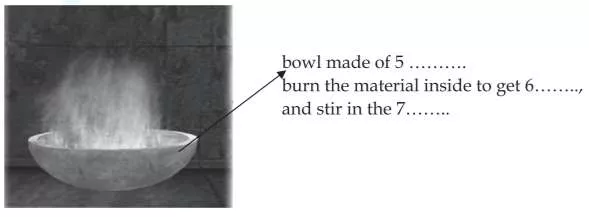
Câu hỏi: bowl made of 5……….
(Chiếc bát được làm từ …….. )
Vị trí: Đoạn D
[…] First, they burn the nut inside a bowl made of half acoconut shell.
Giải thích: Bài đọc nêu rõ các nghệ nhân đốt hạt bên trong một chiếc bát được làm từ nửa vỏ dừa. Vì vậy đáp án cần điền là coconut shell.
Question 6 & 7
Đáp án: 6- Soot | 7-liquid
Câu hỏi: burn the material inside to get 6………., and stir in the 7……….
(Đốt cháy nguyên liệu bên trong để thu được 6………., rồi cho 7……… vào khuấy đều.)
Vị trí: Đoạn D.
First, they burn the nut inside a bowl made of half a coconut shell. They then scrape out the soot and use a pestle to mix it with liquid. Bluing is sometimes added to counteract the reddish hue of the carbon-based pigment. It also makes the outline of the inscribed designs bolder on the dark skin of tattooing subjects.
Giải thích: Sau khi đốt hạt, người thợ sẽ cạo lấy phần soot (muội than) tạo ra. Sau khi thu được muội than, người thợ dùng chày nghiền và trộn phần muội này với liquid (chất lỏng).
Question 8
Đáp án: heartwood
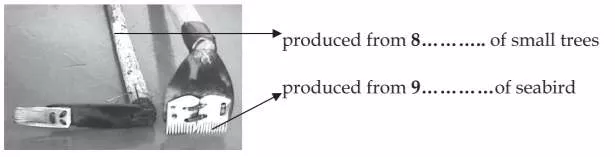
Câu hỏi: produced from 8………. of small trees
(Được làm từ…….. của các cây nhỏ.)
Vị trí: Đoạn E.
[…] which were hafted onto a handle which was made from the heartwood of the bush and struck with a mallet.
Giải thích: Phần tay cầm của dụng cụ xăm được làm từ heartwood (lõi gỗ) của cây bụi. Vì vậy đáp án chính xác là heartwood.
Question 9
Đáp án: wing bone
Câu hỏi: produced from 9………. of seabird
(Được làm từ…….. của chim biển.)
Vị trí: Đoạn E.
specialists used a range of chisels made from albatross wing bone…
Giải thích: Các mũi đục dùng để xăm được chế tạo từ xương cánh của chim hải âu (albatross wing bone). Vì albatross là một loài chim biển nên đáp án cần điền là wing bone.
Câu hỏi của Question 10 – 14
Dạng bài: Table Completion
| Location on the body | Significance | Geometric Patterns |
| 10 _________ of male face | general rank | |
| 11 ____________ of male face | prestige | |
| Female’s right side of the face | 12 ___________ | |
| male back | sense of pride | 13 _________ |
| male chest | bravery | 14 __________ |
Question 10
Đáp án: (the) forehead
Vị trí: Đoạn G.
The male facial tattoo is generally divided into eight sections of the face. The center of the forehead designated a person’s general rank.
Giải thích: Trong bảng, cột Significance cho biết ý nghĩa là general rank (địa vị chung). Trong bài nêu rõ rằng phần giữa trán biểu thị địa vị chung của một người. Vì vậy vị trí cần điền là (the) forehead.
Question 11
Đáp án: chin (area)
Vị trí: Đoạn G.
The cheek area designated the nature of the person’s work. The chin area showed the person’s mana
Giải thích: Từ khóa cần chú ý là mana. Trong văn hóa Polynesia, mana là quyền lực tinh thần, uy tín và vị thế xã hội của một người. Vì vậy, khi bảng yêu cầu vị trí trên khuôn mặt biểu thị prestige, đáp án là chin (area).
Question 12
Đáp án: Mother’s ancestry
Vị trí: Đoạn H.
A person’s ancestry is indicated on each side of the face. The left side is generally the father’s side, and the right side was the mother’s.
Giải thích: Đoạn H giải thích rằng hai bên khuôn mặt thể hiện tổ tiên của một người. Bên trái tượng trưng cho dòng họ bên cha, còn bên phải tượng trưng cho dòng họ bên mẹ. Vì vậy đáp án là Mother’s ancestry.
Question 13
Đáp án: vertical lines
Vị trí: Đoạn H.
The manutahi design is worked on the men’s back. It consists of two vertical lines drawn down the spine, with short vertical lines between them. When a man had the manutahi on this back, he took pride in himself.
Giải thích: Hình xăm manutahi trên lưng nam giới được mô tả gồm hai đường thẳng đứng chạy dọc sống lưng và các đường thẳng đứng ngắn ở giữa. Do đó họa tiết cần điền là vertical lines.
Question 14
Đáp án: Triangles
Vị trí: Đoạn H.
At gatherings of the people he could stand forth in their midst and display his tattoo designs with songs. And rows of triangles design on the men’s chest indicate his bravery.
Giải thích: Những hàng hình tam giác trên ngực nam giới là biểu tượng của lòng dũng cảm. Vì vậy đáp án chính xác là triangles.
3. Dịch bài Tattoo on Tikopia IELTS Reading Answers
Tattoo on Tikopia
A. There are still debates about the origins of Polynesian culture, but one thing we can ensure is that Polynesia is not a single tribe but a complex one. Polynesians which include Marquesans, Samoans, Niueans, Tongans, Cook Islanders, Hawaiians, Tahitians, and Maori, are genetically linked to indigenous peoples of parts of Southeast Asia. It’s a subregion of Oceania, comprising a large grouping of over 1,000 islands scattered over the central and southern Pacific Ocean, within a triangle that has New Zealand, Hawaii and Easter Island as its corners.
Vẫn còn có những cuộc tranh luận về nguồn gốc của văn hóa Polynesia, nhưng một điều chúng ta có thể đảm bảo là Polynesia không phải là một bộ tộc đơn lẻ mà là một bộ tộc phức tạp. Người Polynesia bao gồm người Marquesan, Samoan, Niuean, Tongan, người đảo Cook, Hawaii, Tahitian và Maori, có mối liên kết về mặt di truyền học với các cư dân bản địa ở các khu vực thuộc Đông Nam Á. Đây là một tiểu vùng của Châu Đại Dương, bao gồm một nhóm lớn với hơn 1.000 hòn đảo rải rác khắp khu vực trung tâm và nam Thái Bình Dương, nằm trong một tam giác có các góc là New Zealand, Hawaii và Đảo Phục Sinh.
Từ vựng cần nhớ
- debate (n): cuộc tranh luận, cuộc thảo luận
- ensure (v): đảm bảo, bảo đảm chắc chắn
- linked (adj): liên kết, kết nối (thường dùng ở dạng bị động “linked to”)
- indigenous (adj): bản địa, bản xứ
- subregion (n): tiểu vùng, phân vùng nhỏ
- comprise (v): bao gồm, gồm có
- scatter (v): rải rác, phân tán (thường dùng ở dạng bị động “scattered”)
B. Polynesian history has fascinated the western world since Pacific cultures were first contacted by European explorers in the late 18th century. The small island of Tikopia, for many people —even for many Solomon Islanders — is so far away that it seems like a mythical land; a place like Narnia, that magical land in C. S. Lewis’s classic, ‘The Chronicles of Narnia.’ Maybe because of it — Tikopia, its people, and their cultures have long fascinated scholars, travelers, and casual observers. Like the pioneers Peter Dillion, Dumont D’Urville and John Coleridge Patterson who visit and write about the island in the 1800s, Raymond Firth is one of those people captured by the alluring attraction of Tikopia. As a result, he had made a number of trips to the island since the 1920s and recorded his experiences, observations, and reflections on Tikopia, its people, cultures and the changes that have occurred.
Lịch sử Polynesia đã cuốn hút thế giới phương Tây kể từ khi các nền văn hóa Thái Bình Dương lần đầu tiên tiếp xúc với các nhà thám hiểm châu Âu vào cuối thế kỷ 18. Hòn đảo nhỏ Tikopia đối với nhiều người — thậm chí đối với nhiều người dân đảo Solomon — xa xôi đến mức nó giống như một vùng đất thần thoại; một nơi như Narnia, vùng đất huyền diệu trong tác phẩm kinh điển ‘Biên niên sử Narnia’ của C. S. Lewis. Có lẽ vì điều đó — Tikopia, con người và nền văn hóa của họ từ lâu đã cuốn hút các học giả, khách du lịch và cả những người quan sát ngẫu nhiên. Giống như những người tiên phong Peter Dillion, Dumont D’Urville và John Coleridge Patterson, những người đã ghé thăm và viết về hòn đảo này vào những năm 1800, Raymond Firth là một trong những người bị chinh phục bởi sức quyến rũ đầy mê hoặc của Tikopia. Kết quả là ông đã thực hiện nhiều chuyến đi đến hòn đảo này kể từ những năm 1920 và ghi lại những trải nghiệm, quan sát và những suy ngẫm của mình về Tikopia, con người, nền văn hóa và những thay đổi đã diễn ra.
Từ vựng cần nhớ
- fascinate (v): cuốn hút, mê hoặc
- mythical (adj): thần thoại, mang tính huyền thoại/thần bí
- casual (adj): ngẫu nhiên, không chuyên, tình cờ (casual observer)
- pioneer (n): người tiên phong
- capture (v): chinh phục, thu hút hoàn toàn, giữ chân (ở dạng bị động “captured by”)
- alluring (adj): quyến rũ, lôi cuốn, đầy mê hoặc
- reflection (n): sự suy ngẫm, sự phản ánh
C. While engaged in the study of the kinship and religious life of the people of Tikopia, Firth made a few observations on their tattooing. Brief though these notes are, they may be worth putting on record as an indication of the sociological setting of the practice in this primitive Polynesian community. The origin of the English word ‘tattoo’ actually comes from the Tikopia word ‘tatau’. The word for tattoo marks, in general, is tau, and the operation of tattooing is known as ta tau, ta being the generic term for the act of striking.
Trong khi tham gia vào việc nghiên cứu mối quan hệ họ hàng và đời sống tôn giáo của người dân Tikopia, Firth đã thực hiện một vài quan sát về việc xăm mình của họ. Mặc dù những ghi chép này rất ngắn gọn, chúng có thể đáng được ghi nhận lại như một dấu hiệu cho bối cảnh xã hội học của tập tục này trong cộng đồng Polynesia nguyên thủy này. Nguồn gốc của từ tiếng Anh ‘tattoo’ thực chất đến từ từ ‘tatau’ trong tiếng Tikopia. Từ chỉ các vết xăm nói chung là tau, và quá trình xăm mình được gọi là ta tau, với ta là thuật ngữ mang tính bao quát cho hành động gõ/gạt.
Từ vựng cần nhớ
- engage in (phr v): bận rộn làm gì, tham gia vào việc gì (thường dùng ở dạng bị động “engaged in”)
- kinship (n): mối quan hệ họ hàng, thân tộc
- indication (n): dấu hiệu, sự biểu thị, sự chỉ ra
- sociological (adj): thuộc về xã hội học
- primitive (adj): nguyên thủy, thô sơ
- generic (adj): chung, mang tính khái quát (không thuộc thương hiệu riêng hay cụ thể nào)
D. The technique of tattooing was similar through Polynesia. Traditional tattoo artists create their indelible tattoos using pigment made from the candlenut or kukui nut. First, they burn the nut inside a bowl made of half a coconut shell. They then scrape out the soot and use a pestle to mix it with liquid. Bluing is sometimes added to counteract the reddish hue of the carbon-based pigment. It also makes the outline of the inscribed designs bolder on the dark skin of tattooing subjects.
Kỹ thuật xăm mình tương tự nhau trên khắp Polynesia. Các nghệ sĩ xăm truyền thống tạo ra những hình xăm không thể xóa của họ bằng cách sử dụng hạt màu được làm từ quả lai (candlenut) hoặc quả kukui. Đầu tiên, họ đốt quả bên trong một cái bát làm từ một nửa gáo dừa. Sau đó, họ cạo muội than ra và dùng một cái chày để trộn nó với chất lỏng. Chất tạo màu xanh đôi khi được thêm vào để trung hòa sắc đỏ của hạt màu gốc carbon. Nó cũng giúp làm cho đường nét của các họa tiết được khắc lên trở nên rõ nét trên làn da sẫm màu của những người được xăm.
Từ vựng cần nhớ
- indelible (adj): không thể xóa nhòa, bền vững (mực, ký ức)
- pigment (n): hạt màu, chất màu, sắc tố
- scrape (v): cạo, gạt đi
- pestle (n): cái chày (giã thuốc, giã cua)
- counteract (v): trung hòa, làm giảm tác động, chống lại
- hue (n): sắc độ, tông màu, tông sắc
- inscribe (v): khắc, ghi lên (ở dạng bị động/phân từ “inscribed”)
- bold (adj): rõ nét, đậm màu, nổi bật (ở dạng so sánh hơn “bolder”)
E. For the instruments used when tattooing, specialists used a range of chisels made from albatross wing bone which were hafted onto a handle which was made from the heartwood of the bush and struck with a mallet. The tattooer began by sketching with charcoal a design on the supine subject, whose skin at that location was stretched taut by one or more apprentices. The tattooer then dipped the appropriate points — either a single one or a whole comb — into the ink (usually contained in a coconut-shell cup) and tapped it into the subject’s skin, holding the blade handle in one hand and tapping it with the other. The blood that usually trickled from the punctures was wiped away either by the tattooer or his apprentice, the latter having also inevitably been painful —a test of fortitude that tattooers sought to shorten by working as fast as possible. In fact, tattoos nearly always festered and often led to sickness — and in some cases death.
Về các công cụ được sử dụng khi xăm, những người chuyên nghiệp sử dụng một loạt các dụng cụ đục làm từ xương cánh chim hải âu, được lắp chắc chắn vào một chiếc cán làm từ lõi gỗ của cây bụi và gõ bằng một chiếc vồ. Người thợ xăm bắt đầu bằng việc phác thảo bằng than củi một thiết kế lên người đối tượng đang nằm ngửa, người có làn da tại vị trí đó được kéo căng chặt bởi một hoặc nhiều người học việc. Người thợ xăm sau đó nhúng các đầu xăm phù hợp — có thể là một đầu đơn lẻ hoặc cả một chiếc lược xăm — vào mực (thường đựng trong cốc gáo dừa) và gõ nhẹ lên da của đối tượng, một tay giữ cán lưỡi xăm và tay kia gõ vào đó. Máu thường rỉ ra từ những vết đâm được lau sạch bởi thợ xăm hoặc người học việc của anh ta, quá trình sau đó cũng không thể tránh khỏi là rất đau đớn — một bài kiểm tra sự nghị lực mà những người thợ xăm tìm cách rút ngắn bằng cách làm việc càng nhanh càng tốt. Trên thực tế, các vết xăm gần như luôn luôn bị nhiễm trùng và thường dẫn đến bệnh tật — và trong một số trường hợp là tử vong.
Từ vựng cần nhớ
- chisel (n): cái đục (dụng cụ gõ, chạm khắc)
- haft (v): gắn chuôi, lắp cán (ở dạng bị động “hafted”)
- heartwood (n): lõi gỗ, phần gỗ già ở tâm cây
- mallet (n): cái vồ (bằng gỗ hoặc cao su)
- sketch (v): phác thảo, vẽ phác (ở dạng “sketching”)
- supine (adj): nằm ngửa
- taut (adj): căng, căng chặt (da, dây thừng)
- trickle (v): rỉ ra, chảy nhỏ giọt, chảy chậm (ở dạng quá khứ “trickled”)
- puncture (n): vết đâm, lỗ thủng (ở dạng số nhiều “punctures”)
- inevitably (adv): chắc chắn, không thể tránh khỏi
- fortitude (n): sự kiên cường, nghị lực, lòng dũng cảm khi chịu đựng gian khổ
- fester (v): mưng mủ, nhiễm trùng (ở dạng quá khứ “festered”)
F. In ancient Polynesian society, nearly everyone was tattooed. It was an integral part of ancient culture and was much more than a body ornament. Tattooing indicated ones’ genealogy and/or rank in society. It was a sign of wealth, of strength and of the ability to endure pain. Those who went without them were seen as persons of lower social status. As such, chiefs and warriors generally had the most elaborate tattoos. Tattooing was generally begun at adolescence, and would often not be completed for a number of years. Receiving tattoos constituted an important milestone between childhood and adulthood, and was accompanied by many rites and rituals. Apart from signaling status and rank, another reason for the practice in traditional times was to make a person more attractive to the opposite sex.
Trong xã hội Polynesia cổ đại, hầu như tất cả mọi người đều được xăm mình. Đó là một phần không thể thiếu của nền văn hóa cổ xưa và không chỉ đơn thuần là một món đồ trang sức cho cơ thể. Việc xăm mình thể hiện gia phả và/hoặc địa vị của một người trong xã hội. Đó là dấu hiệu của sự giàu có, sức mạnh và khả năng chịu đựng nỗi đau. Những ai không có hình xăm bị coi là những người có địa vị xã hội thấp hơn. Vì thế, các tù trưởng và chiến binh thường có những hình xăm phức tạp nhất. Việc xăm mình thường bắt đầu ở tuổi vị thành niên và thường không thể hoàn thành trong vòng nhiều năm. Việc đón nhận những hình xăm cấu thành một cột mốc quan trọng giữa thời thơ ấu và tuổi trưởng thành, đồng thời đi kèm với nhiều nghi thức và nghi lễ. Ngoài việc báo hiệu địa vị và cấp bậc, một lý do khác cho tập tục này trong thời kỳ truyền thống là để giúp một người trở nên hấp dẫn hơn đối với người khác giới.
Từ vựng cần nhớ
- integral (adj): thiết yếu, không thể thiếu, trọn vẹn
- genealogy (n): gia phả, lịch sử dòng họ
- endure (v): chịu đựng, cam chịu
- elaborate (adj): phức tạp, tỉ mỉ, tinh xảo
- adolescence (n): tuổi vị thành niên, thời thanh thiếu niên
- milestone (n): cột mốc quan trọng, sự kiện bước ngoặt
- rite (n): nghi thức
- ritual (n): nghi lễ
G. The male facial tattoo is generally divided into eight sections of the face. The center of the forehead designated a person’s general rank. The area around the brows designated his position. The area around the eyes and the nose designated his hapu, or sub-tribe rank. The area around the temples served to detail his signature. This signature was once memorized by tribal chiefs who used it when buying property, signing deeds, and officiating orders. The cheek area designated the nature of the person’s work. The chin area showed the person’s mana. Lastly, the jaw area designated a person’s birth status.
Hình xăm trên khuôn mặt nam giới thường được chia thành tám phần trên mặt. Vùng trung tâm trán biểu thị địa vị chung của một người. Vùng xung quanh lông mày biểu thị vị trí của anh ta. Vùng xung quanh mắt và mũi biểu thị cấp bậc của anh ta trong dòng họ (hapu) hoặc tiểu bộ tộc. Vùng xung quanh thái dương dùng để thể hiện chi tiết chữ ký của anh ta. Chữ ký này từng được các tù trưởng bộ tộc ghi nhớ để sử dụng khi mua tài sản, ký kết văn bản chuyển nhượng và phê chuẩn các mệnh lệnh. Vùng má xác định tính chất công việc của người đó. Vùng cằm thể hiện sức mạnh tâm linh (mana) của người đó. Cuối cùng, vùng hàm biểu thị địa vị khi sinh ra của một người.
Từ vựng cần nhớ
- designate (v): biểu thị, xác định, chỉ định (ở dạng quá khứ “designated”)
- signature (n): chữ ký, dấu hiệu đặc trưng
- deed (n): chứng thư, văn bản chuyển nhượng pháp lý (nhà đất, tài sản – ở dạng số nhiều “deeds”)
- officiate (v): ban hành chính thức, thực thi nhiệm vụ chính thức (ở dạng phân từ “officiating”)
H. A person’s ancestry is indicated on each side of the face. The left side is generally the father’s side, and the right side is the mothers. The manutahi design is worked on the men’s back. It consists of two vertical lines drawn down the spine, with short vertical lines between them. When a man had the manutahi on his back, he took pride in himself. At gatherings of the people he could stand forth in their midst and display his tattoo designs with songs. And rows of triangles designed on the men’s chest indicate his bravery.
Tổ tiên của một người được thể hiện ở mỗi bên của khuôn mặt. Phía bên trái thường là phía của cha, và phía bên phải là của mẹ. Họa tiết manutahi được xăm trên lưng nam giới. Nó bao gồm hai đường thẳng đứng được vẽ dọc theo xương sống, với các đường thẳng đứng ngắn ở giữa chúng. Khi một người đàn ông có họa tiết manutahi trên lưng, anh ta sẽ vô cùng tự hào về bản thân. Tại các cuộc họp mặt của mọi người, anh ta có thể đứng ra giữa đám đông của họ và phô diễn các thiết kế hình xăm của mình cùng với những bài hát. Và những hàng hình tam giác được thiết kế trên ngực của nam giới thể hiện lòng dũng cảm của anh ta.
Từ vựng cần nhớ
- ancestry (n): tổ tiên, dòng dõi, nguồn gốc gia đình
- vertical (adj): thẳng đứng, có chiều dọc
- gathering (n): cuộc họp mặt, buổi tụ họp (ở dạng số nhiều “gatherings”)
- midst (n): giữa, trung tâm (thường dùng trong cụm “in their midst”)
I. Tattoo was a way of delivering information about its owner. It’s also a traditional method to fetch spiritual power, protection and strength. The Polynesians use this as a sign of character, position and levels in a hierarchy. Polynesian people believe that a person’s mana, their spiritual power or life force, is displayed through their tattoo.
Xăm mình là một cách truyền tải thông tin về người sở hữu nó. Đó cũng là một phương pháp truyền thống để thu hút sức mạnh tâm linh, sự bảo vệ và sức mạnh thể chất. Người Polynesia sử dụng điều này như một dấu hiệu của tính cách, vị trí và các cấp bậc trong một hệ thống phân cấp. Người dân Polynesia tin rằng mana của một người, tức là sức mạnh tâm linh hoặc sinh lực của họ, được thể hiện thông qua hình xăm của họ.
Từ vựng cần nhớ
- fetch (v): đem lại, lấy về, thu hút
- hierarchy (n): hệ thống phân cấp, đẳng cấp xã hội
Hy vọng phần giải chi tiết Tattoo on Tikopia IELTS Reading Answers trên đã giúp bạn hiểu hơn về cách làm và đối chiếu thông tin trong bài đọc.
Tham gia khóa học IELTS miễn phí tại website The IELTS Workshop học cách làm IELTS theo từng dạng bài cùng đội ngũ giáo viên 8.0+ IELTS.