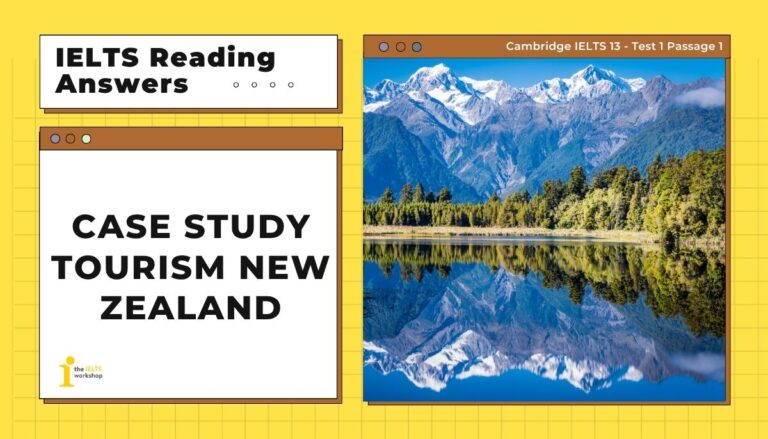
Case Study Tourism New Zealand là bài đọc thuộc Cambridge IELTS 13 – Test 1 – Reading Passage 1, xoay quanh chiến dịch quảng bá du lịch New Zealand và cách quốc gia này xây dựng hình ảnh điểm đến trên thị trường quốc tế. Trong bài viết này, TIW sẽ tổng hợp Case Study Tourism New Zealand IELTS Reading Answers, kèm bản dịch và lời giải chi tiết từng câu hỏi, giúp bạn hiểu rõ nội dung bài đọc và cải thiện kỹ năng làm bài IELTS Reading.
1. Đáp án đề Case Study Tourism New Zealand
| Câu hỏi | Đáp án |
| 1 | update |
| 2 | environment |
| 3 | captain |
| 4 | films |
| 5 | season |
| 6 | accomodation |
| 7 | blog |
| 8 | False |
| 9 | Not Given |
| 10 | False |
| 11 | True |
| 12 | Not Given |
| 13 | True |
2. Giải thích chi tiết Case Study Tourism New Zealand IELTS Reading Answers
Dạng bài: Table Completion ▼
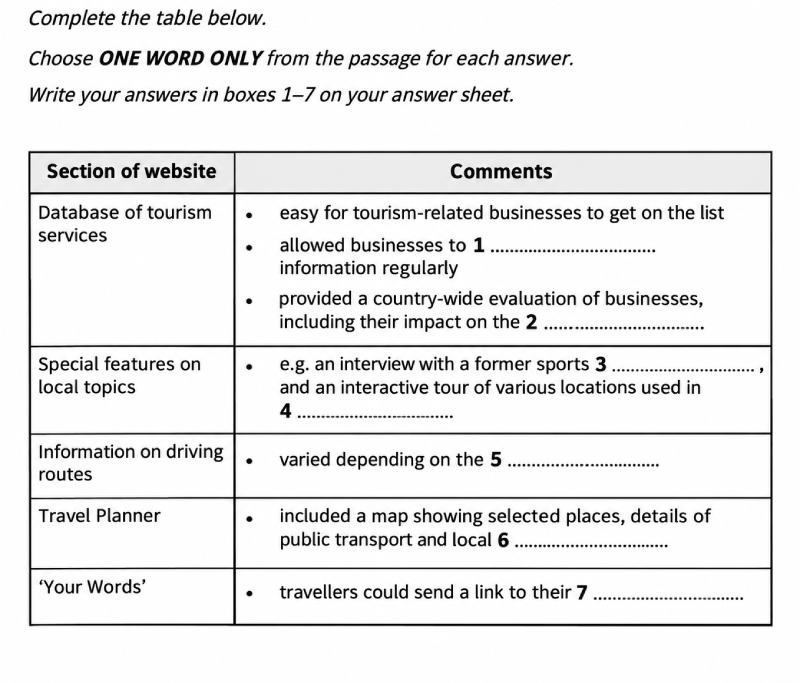
Question 1
Đáp án: update
Câu hỏi: Database of tourism services:
- allowed businesses to 1 ______ information regularly. (Cho phép các doanh nghiệp ______ thông tin thường xuyên.)
Vị trí trong bài: Đoạn B
| “In addition, because participating businesses were able to update the details they gave on a regular basis, the information provided remained accurate.” |
Phân tích:
Câu hỏi yêu cầu tìm hoạt động mà các doanh nghiệp được phép thực hiện thường xuyên đối với thông tin trên website. Trong bài, tác giả cho biết các doanh nghiệp tham gia (participating businesses) có thể cập nhật thông tin (update the details) mà họ cung cấp một cách thường xuyên. Nhờ đó, thông tin trên website luôn chính xác (accurate). Vì vậy, từ cần điền là update.
Các keyword paraphrase:
- allowed businesses to (cho phép doanh nghiệp) → participating businesses were able to (các doanh nghiệp tham gia có thể)
- information (thông tin) → details (thông tin chi tiết)
- regularly (thường xuyên) → on a regular basis (một cách thường xuyên)
⇒ Đáp án: update
Question 2
Đáp án: environment
Câu hỏi: Database of tourism services:
- provided a country-wide evaluation of businesses, including their impact on the 2 ______. (Cung cấp đánh giá doanh nghiệp trên toàn quốc, bao gồm tác động của họ đối với ______.)
Vị trí trong bài: Đoạn B
| “Tourism New Zealand organised a scheme whereby organisations appearing on the website underwent an independent evaluation against a set of agreed national standards of quality. As part of this, the effect of each business on the environment was considered.” |
Phân tích:
Trong bài, Tourism New Zealand tổ chức một chương trình đánh giá độc lập (independent evaluation) dựa trên các tiêu chuẩn chất lượng quốc gia (national standards of quality). Quá trình này cũng xem xét tác động của từng doanh nghiệp đối với môi trường (effect of each business on the environment). Do đó, đáp án là environment (môi trường).
Các keyword paraphrase:
- country-wide evaluation (đánh giá trên toàn quốc) → independent evaluation against national standards (đánh giá độc lập theo tiêu chuẩn quốc gia)
- businesses (doanh nghiệp) → organisations (các tổ chức)
- impact on (tác động đến) → effect on (ảnh hưởng đến)
⇒ Đáp án: environment
Question 3
Đáp án: captain
Câu hỏi: Special features on local topics:
- e.g. an interview with a former sports 3 ______, (Ví dụ: một cuộc phỏng vấn với một cựu ______ thể thao.)
Vị trí trong bài: Đoạn C
| “One of the most popular was an interview with former New Zealand All Blacks rugby captain Tana Umaga.” |
Phân tích:
Câu hỏi yêu cầu xác định vai trò của nhân vật thể thao từng được phỏng vấn trên website. Trong bài, tác giả nhắc đến cuộc phỏng vấn với Tana Umaga, người từng là đội trưởng đội bóng bầu dục New Zealand All Blacks (former New Zealand All Blacks rugby captain). Đây là một trong những nội dung được yêu thích nhất trên website. Vì vậy, đáp án là captain (đội trưởng).
Các keyword paraphrase:
- an interview (một cuộc phỏng vấn) → an interview (một cuộc phỏng vấn)
- former sports captain (cựu đội trưởng thể thao) → former New Zealand All Blacks rugby captain (cựu đội trưởng đội bóng bầu dục New Zealand All Blacks)
⇒ Đáp án: captain
Question 4
Đáp án: films
Câu hỏi: and an interactive tour of various locations used in 4 ______. (Một chuyến tham quan tương tác qua nhiều địa điểm được sử dụng trong ______.)
Vị trí trong bài: Đoạn C
| “Another feature that attracted a lot of attention was an interactive journey through a number of the locations chosen for blockbuster films which had made use of New Zealand’s stunning scenery as a backdrop.” |
Phân tích:
Câu hỏi yêu cầu xác định mục đích sử dụng các địa điểm xuất hiện trong chuyến tham quan tương tác. Trong bài, website cung cấp một hành trình tương tác (interactive journey) qua những địa điểm từng được chọn làm bối cảnh cho các bộ phim bom tấn (blockbuster films). Những bộ phim này tận dụng phong cảnh tuyệt đẹp của New Zealand (stunning scenery) làm nền. Vì vậy, từ cần điền là films (phim).
Các keyword paraphrase:
- interactive tour (chuyến tham quan tương tác) → interactive journey (hành trình tương tác)
- various locations (nhiều địa điểm khác nhau) → a number of the locations (một số địa điểm)
- used in films (được sử dụng trong phim) → chosen for blockbuster films (được lựa chọn cho các bộ phim bom tấn)
⇒ Đáp án: films
Question 5
Đáp án: season
Câu hỏi: Information on driving routes – varied depending on the 5 ______. (Thông tin về các tuyến đường lái xe thay đổi tùy theo ______.)
Vị trí trong bài: Đoạn C
| “To make it easier to plan motoring holidays, the site catalogued the most popular driving routes in the country, highlighting different routes according to the season and indicating distances and times.” |
Phân tích:
Câu hỏi yêu cầu xác định yếu tố ảnh hưởng đến việc lựa chọn các tuyến đường lái xe. Trong bài, website tổng hợp những tuyến đường lái xe phổ biến (popular driving routes) tại New Zealand và giới thiệu các tuyến khác nhau tùy theo mùa (according to the season). Website còn cung cấp khoảng cách và thời gian di chuyển để hỗ trợ du khách lên kế hoạch. Vì vậy, đáp án là season (mùa).
Các keyword paraphrase:
- information on driving routes (thông tin về các tuyến đường lái xe) → catalogued the most popular driving routes (tổng hợp các tuyến đường lái xe phổ biến)
- varied depending on (thay đổi tùy theo) → different routes according to (các tuyến đường khác nhau tùy theo)
⇒ Đáp án: season
Question 6
Đáp án: accommodation
Câu hỏi: Travel Planner
- included a map showing selected places, details of public transport and local 6 ______. (Bao gồm bản đồ hiển thị các địa điểm đã chọn, thông tin phương tiện công cộng và ______ tại địa phương.)
Vị trí trong bài: Đoạn D
| “The Travel Planner offered suggested routes and public transport options between the chosen locations. There were also links to accommodation in the area.” |
Phân tích:
Câu hỏi yêu cầu xác định thông tin bổ sung được cung cấp trong công cụ Travel Planner, bên cạnh bản đồ và phương tiện công cộng. Trong bài, công cụ này cho phép du khách chọn địa điểm, xem các tuyến đường gợi ý (suggested routes) và phương tiện giao thông công cộng (public transport options). Ngoài ra, website còn cung cấp liên kết đến các cơ sở lưu trú trong khu vực (accommodation in the area). Vì vậy, đáp án là accommodation.
Các keyword paraphrase:
- details of public transport (thông tin phương tiện công cộng) → public transport options (các lựa chọn giao thông công cộng)
- local (tại địa phương) → in the area (trong khu vực)
- selected places (các địa điểm đã chọn) → chosen locations (các địa điểm được lựa chọn)
⇒ Đáp án: accommodation
Question 7
Đáp án: blog
Câu hỏi: ‘Your Words’
- travellers could send a link to their 7 ______. (Du khách có thể gửi liên kết đến ______ của mình.)
Vị trí trong bài: Đoạn D
| “The website also had a ‘Your Words’ section where anyone could submit a blog of their New Zealand travels for possible inclusion on the website.” |
Phân tích:
Câu hỏi yêu cầu xác định nội dung mà du khách có thể gửi đến mục “Your Words” trên website. Trong bài, tác giả cho biết bất kỳ ai cũng có thể gửi một bài blog về chuyến du lịch New Zealand để có cơ hội được đăng tải trên website. Vì vậy, từ cần điền là blog.
Các keyword paraphrase:
- travellers (du khách) → anyone (bất kỳ ai)
- could send (có thể gửi) → could submit (có thể gửi/nộp)
- their blog (blog của họ) → a blog of their New Zealand travels (blog về chuyến du lịch New Zealand của họ)
⇒ Đáp án: blog
Dạng bài: TRUE / FALSE / NOT GIVEN ▼
Question 8
Đáp án: TRUE
Câu hỏi: The website www.newzealand.com aimed to provide ready-made itineraries and packages for travel companies and individual tourists.
(Website www.newzealand.com nhằm cung cấp lịch trình và gói du lịch được chuẩn bị sẵn cho các công ty du lịch và khách du lịch cá nhân.)
Vị trí trong bài: Đoạn F
| “The website was set up to allow both individuals and travel organizations to create itineraries and travel packages to suit their own needs and interests.” |
Phân tích:
Câu hỏi nói website được xây dựng nhằm cung cấp lịch trình và gói du lịch cho cả cá nhân và tổ chức du lịch. Trong bài, tác giả xác nhận website được thiết lập để hai nhóm này có thể tạo các lịch trình và gói du lịch phù hợp với nhu cầu và sở thích riêng (suit their own needs and interests). Thông tin về mục đích và đối tượng sử dụng phù hợp với câu hỏi.
Các keyword paraphrase:
- aimed to (nhằm mục đích) → was set up to (được thiết lập để)
- travel companies (công ty du lịch) → travel organizations (tổ chức du lịch)
- individual tourists (khách du lịch cá nhân) → individuals (cá nhân)
- itineraries and packages (lịch trình và gói du lịch) → itineraries and travel packages (lịch trình và gói du lịch)
⇒ Đáp án: TRUE
Question 9
Đáp án: NOT GIVEN
Câu hỏi: It was found that most visitors started searching on the website by geographical location. (Người ta phát hiện rằng phần lớn du khách bắt đầu tìm kiếm trên website theo vị trí địa lý.)
Vị trí trong bài: Đoạn F
| “On the website, visitors can search for activities not solely by geographical location, but also by the particular nature of the activity.” |
Phân tích:
Câu hỏi khẳng định phần lớn du khách (most visitors) bắt đầu tìm kiếm theo vị trí địa lý (geographical location). Trong bài, tác giả chỉ cho biết website cho phép tìm kiếm hoạt động không chỉ theo vị trí địa lý mà còn theo loại hình hoạt động (nature of the activity). Tuy nhiên, bài không cung cấp số liệu hoặc thông tin về cách tìm kiếm được đa số du khách lựa chọn đầu tiên. Vì vậy, không đủ căn cứ để xác nhận hay phủ nhận câu hỏi.
Các keyword paraphrase:
- searching (tìm kiếm) → search for activities (tìm kiếm các hoạt động)
- geographical location (vị trí địa lý) → geographical location (vị trí địa lý)
- most visitors started searching (phần lớn du khách bắt đầu tìm kiếm) → không được đề cập
⇒ Đáp án: NOT GIVEN
Question 10
Đáp án: FALSE
Câu hỏi: According to research, 26% of visitor satisfaction is related to their accommodation. (Theo nghiên cứu, 26% mức độ hài lòng của du khách liên quan đến chỗ ở.)
Vị trí trong bài: Đoạn F
| “This is important as research shows that activities are the key driver of visitor satisfaction, contributing 74% to visitor satisfaction, while transport and accommodation account for the remaining 26%.” |
Phân tích:
Câu hỏi cho rằng 26% mức độ hài lòng của du khách đến từ chỗ ở. Tuy nhiên, nghiên cứu trong bài cho biết các hoạt động du lịch) đóng góp 74%, còn giao thông và chỗ ở cộng lại chiếm 26% còn lại. Như vậy, 26% không phải tỷ lệ dành riêng cho chỗ ở. Câu hỏi đã bỏ qua yếu tố giao thông, làm sai lệch thông tin.
Các keyword paraphrase:
- according to research (theo nghiên cứu) → research shows (nghiên cứu cho thấy)
- is related to (có liên quan đến) → account for (chiếm tỷ lệ)
- accommodation (chỗ ở) → transport and accommodation (giao thông và chỗ ở)
⇒ Đáp án: FALSE
Question 11
Đáp án: TRUE
Câu hỏi: Visitors to New Zealand like to become involved in the local culture.
(Du khách đến New Zealand thích tham gia và trải nghiệm văn hóa địa phương.)
Vị trí trong bài: Đoạn F
| “It has also been found that visitors enjoy cultural activities most when they are interactive, such as visiting a marae (meeting ground) to learn about traditional Maori life.” |
Phân tích:
Câu hỏi nói du khách thích tham gia vào văn hóa địa phương (become involved in the local culture). Trong bài, nghiên cứu cho thấy du khách đặc biệt yêu thích các hoạt động văn hóa có tính tương tác (interactive cultural activities). Ví dụ, họ có thể đến thăm marae, một địa điểm sinh hoạt cộng đồng, để tìm hiểu đời sống truyền thống của người Maori (traditional Maori life). Điều này chứng minh du khách muốn trực tiếp trải nghiệm văn hóa thay vì chỉ quan sát.
Các keyword paraphrase:
- like (thích) → enjoy (yêu thích)
- become involved in (tham gia vào) → interactive (có tính tương tác)
- local culture (văn hóa địa phương) → cultural activities / traditional Maori life (hoạt động văn hóa / đời sống truyền thống Maori)
⇒ Đáp án: TRUE
Question 12
Đáp án: NOT GIVEN
Câu hỏi: Visitors like staying in small hotels in New Zealand rather than in larger ones.
(Du khách thích lưu trú tại các khách sạn nhỏ ở New Zealand hơn là các khách sạn lớn.)
Vị trí trong bài: Đoạn F
| “In addition, it appears that visitors to New Zealand don’t want to be ‘one of the crowd’ and find activities that involve only a few people more special and meaningful.” |
Phân tích:
Câu hỏi đề cập đến sở thích lựa chọn khách sạn nhỏ thay vì khách sạn lớn. Trong bài, tác giả chỉ nói du khách không muốn trở thành một người trong đám đông (one of the crowd) và đánh giá những hoạt động có ít người tham gia (activities that involve only a few people) là đặc biệt, ý nghĩa hơn. Thông tin này nói về quy mô hoạt động du lịch, không phải kích thước khách sạn. Vì vậy, bài không cung cấp đủ thông tin để kết luận.
Các keyword paraphrase:
- visitors like (du khách thích) → visitors … find … more special and meaningful (du khách cảm thấy … đặc biệt và ý nghĩa hơn)
- small hotels rather than larger ones (khách sạn nhỏ thay vì khách sạn lớn) → không được đề cập
- only a few people (chỉ một vài người) → activities that involve only a few people (hoạt động có ít người tham gia)
⇒ Đáp án: NOT GIVEN
Question 13
Đáp án: FALSE
Câu hỏi: Many visitors feel it is unlikely that they will return to New Zealand after their visit. (Nhiều du khách cho rằng họ khó có khả năng quay trở lại New Zealand sau chuyến đi.)
Vị trí trong bài: Đoạn G
| “Because of the long-haul flight, most visitors stay for longer (average 20 days) and want to see as much of the country as possible on what is often seen as a once-in-a-lifetime visit.” |
Phân tích:
Câu hỏi cho rằng nhiều du khách cảm thấy khó có khả năng quay lại New Zealand. Trong bài, tác giả giải thích rằng do chuyến bay đường dài (long-haul flight), phần lớn du khách thường ở lại lâu hơn, trung bình 20 ngày, và cố gắng khám phá nhiều nơi nhất có thể. Chuyến đi thường được xem là trải nghiệm chỉ có một lần trong đời (once-in-a-lifetime visit), cho thấy việc quay lại không được kỳ vọng là phổ biến.
Các keyword paraphrase:
- unlikely that they will return (khó có khả năng quay trở lại) → once-in-a-lifetime visit (chuyến đi thường chỉ có một lần trong đời)
- many visitors (nhiều du khách) → most visitors (phần lớn du khách)
- after their visit (sau chuyến đi) → once-in-a-lifetime visit (chuyến đi một lần trong đời)
⇒ Đáp án: FALSE
3. Dịch bài Case Study: Tourism New Zealand – IELTS Reading
Case Study: Tourism New Zealand Website
A.
New Zealand is a small country of four million inhabitants, a long-haul flight from all the major tourist-generating markets of the world. Tourism currently makes up 9% of the country’s gross domestic product and is the country’s largest export sector. Unlike other export sectors, which make products and then sell them overseas, tourism brings its customers to New Zealand. The product is the country itself – the people, the places, and the experiences. In 1999, Tourism New Zealand launched a campaign to communicate a new brand position to the world. The campaign focused on New Zealand’s scenic beauty, exhilarating outdoor activities and authentic Maori culture, and it made New Zealand one of the strongest national brands in the world.
New Zealand là một quốc gia nhỏ với bốn triệu cư dân, cách xa các thị trường du lịch lớn trên thế giới một chuyến bay dài. Du lịch hiện chiếm 9% tổng sản phẩm quốc nội và là ngành xuất khẩu lớn nhất của đất nước này. Không giống như các ngành xuất khẩu khác vốn tạo ra sản phẩm rồi bán ra nước ngoài, ngành du lịch lại đưa khách hàng tới chính New Zealand. Sản phẩm ở đây chính là đất nước này – con người, danh lam thắng cảnh và những trải nghiệm. Năm 1999, Cục Du lịch New Zealand đã phát động một chiến dịch nhằm giới thiệu một vị thế thương hiệu mới tới thế giới. Chiến dịch tập trung vào vẻ đẹp danh lam thắng cảnh, các hoạt động ngoài trời hấp dẫn và nền văn hóa Maori chính thống, từ đó đưa New Zealand trở thành một trong những thương hiệu quốc gia mạnh nhất thế giới.
Từ vựng cần nhớ:
- inhabitant (n): cư dân, người dân sinh sống
- long-haul (adj): (chuyến bay/hành trình) đường dài
- gross domestic product (GDP) (n phr): tổng sản phẩm quốc nội
- sector (n): ngành, lĩnh vực kinh tế
- overseas (adj/adv): ở nước ngoài, hải ngoại
- brand positioning (n phr): định vị thương hiệu, vị thế thương hiệu
- scenic (adj): có cảnh quan đẹp, thuộc về thắng cảnh
- exhilarating (adj): hào hứng, phấn khích, kích thích tinh thần
- authentic (adj): đích thực, xác thực, chuẩn bản xứ
B.
A key feature of the campaign was the website www.newzealand.com, which provided potential visitors to New Zealand with a single gateway to everything the destination had to offer. The heart of the website was a database of tourism services operators, both those based in New Zealand and those based abroad which offered tourism service to the country. Any tourism-related business could be listed by filling in a simple form. This meant that even the smallest bed and breakfast address or specialist activity provider could gain a web presence with access to an audience of long-haul visitors. In addition, because participating businesses were able to update the details they gave on a regular basis, the information provided remained accurate. And to maintain and improve standards, Tourism New Zealand organised a scheme whereby organisations appearing on the website underwent an independent evaluation against a set of agreed national standards of quality. As part of this, the effect of each business on the environment was considered.
Một đặc điểm mấu chốt của chiến dịch là trang web www.newzealand.com, nơi cung cấp cho du khách tiềm năng một cổng thông tin duy nhất dẫn đến mọi thứ mà điểm đến này mang lại. Trọng tâm của trang web là cơ sở dữ liệu về các đơn vị điều hành dịch vụ du lịch, gồm cả các đơn vị có trụ sở tại New Zealand lẫn các đơn vị ở nước ngoài có cung cấp dịch vụ du lịch tới quốc gia này. Bất kỳ doanh nghiệp nào liên quan đến du lịch cũng có thể được niêm yết bằng cách điền vào một biểu mẫu đơn giản. Điều này có nghĩa là ngay cả cơ sở kinh doanh nhà nghỉ phục vụ bữa sáng nhỏ nhất hay nhà cung cấp hoạt động chuyên biệt cũng có thể có được sự hiện diện trên mạng web để tiếp cận tệp du khách bay đường dài. Ngoài ra, vì các doanh nghiệp tham gia có thể cập nhật chi tiết thông tin một cách thường xuyên, dữ liệu được cung cấp luôn duy trì tính chuẩn xác. Nhằm duy trì và nâng cao các tiêu chuẩn, Cục Du lịch New Zealand đã tổ chức một chương trình mà theo đó các tổ chức xuất hiện trên trang web phải trải qua sự đánh giá độc lập dựa trên bộ tiêu chuẩn chất lượng quốc gia đã thống nhất. Là một phần của điều này, tác động của từng doanh nghiệp tới môi trường cũng được xem xét.
Từ vựng cần nhớ:
- gateway (n): cửa ngõ, cổng thông tin (kết nối)
- destination (n): điểm đến, nơi đến
- operator (n): đơn vị điều hành, người vận hành
- based in (adj phr): có trụ sở tại, đóng tại
- bed and breakfast (n): cơ sở lưu trú nhỏ phục vụ chỗ ngủ và bữa sáng
- presence (n): sự hiện diện (ví dụ: web/online presence – sự hiện diện trực tuyến)
- on a regular basis (idiom): một cách đều đặn, thường xuyên
- scheme (n): kế hoạch, chương trình, đề án
- undergo (v): trải qua, chịu đựng (quá trình kiểm tra, phẫu thuật, đánh giá)
- evaluation (n): sự đánh giá, định giá
C.
To communicate the New Zealand experience, the site also carried features relating to famous people and places. One of the most popular was an interview with former New Zealand All Blacks rugby captain Tana Umaga. Another feature that attracted a lot of attention was an interactive journey through a number of the locations chosen for blockbuster films which had made use of New Zealand’s stunning scenery as a backdrop. As the site developed, additional features were added to help independent travelers devise their own customised itineraries. To make it easier to plan motoring holidays, the site catalogued the most popular driving routes in the country, highlighting different routes according to the season and indicating distances and times.
Để giới thiệu trải nghiệm New Zealand, trang web cũng đăng tải các bài viết chuyên đề liên quan đến những nhân vật và địa danh nổi tiếng. Một trong những nội dung được yêu thích nhất là cuộc phỏng vấn cựu đội trưởng đội bóng bầu dục New Zealand All Blacks, Tana Umaga. Một yếu tố khác thu hút nhiều sự chú ý là chuyến hành trình tương tác qua hàng loạt địa điểm được chọn cho các bộ phim bom tấn, những tác phẩm đã tận dụng phong cảnh tuyệt đẹp của New Zealand làm bối cảnh. Khi trang web phát triển, các tính năng bổ sung đã được tích hợp nhằm giúp những du khách du lịch tự túc lên kế hoạch các lịch trình được cá nhân hóa theo ý mình. Để giúp việc lên kế hoạch cho các kỳ nghỉ tự lái xe dễ dàng hơn, trang web đã lập danh mục các cung đường lái xe phổ biến nhất trong nước, làm nổi bật các tuyến đường khác nhau theo từng mùa cùng với thông số khoảng cách và thời gian di chuyển.
Từ vựng cần nhớ:
- interactive (adj): mang tính tương tác
- blockbuster (n): phim bom tấn, tác phẩm thành công vang dội
- stunning (adj): lộng lẫy, tuyệt đẹp, làm choáng ngợp
- backdrop (n): bối cảnh nền, phông nền
- devise (v): phát minh, nghĩ ra, vạch ra (kế hoạch/phương pháp)
- customised/customized (adj): được cá nhân hóa, tùy chỉnh theo yêu cầu
- itinerary (n): lịch trình chuyến đi, lộ trình
- catalogue / catalog (v): lập danh mục, phân loại thành danh sách
D.
Later, a Travel Planner feature was added, which allowed visitors to click and ‘bookmark’ places or attractions they were interested in, and then view the results on a map. The Travel Planner offered suggested routes and public transport options between the chosen locations. There were also links to accommodation in the area. By registering with the website, users could save their Travel Plan and return to it later, or print it out to take on the visit. The website also had a ‘Your Words’ section where anyone could submit a blog of their New Zealand travels for possible inclusion on the website.
Về sau, tính năng “Lập kế hoạch du lịch” đã được bổ sung, cho phép du khách nhấp chuột và ‘đánh dấu’ các địa điểm hoặc điểm tham quan mà họ quan tâm, sau đó xem kết quả trên bản đồ. Công cụ này đưa ra các gợi ý tuyến đường và phương án phương tiện công cộng kết nối giữa các địa điểm đã chọn. Ngoài ra còn có các liên kết tới các điểm lưu trú trong khu vực. Bằng cách đăng ký tài khoản trên trang web, người dùng có thể lưu Kế hoạch du lịch của mình để xem lại sau hoặc in ra để mang theo trong chuyến đi. Trang web cũng có mục ‘Your Words’ (Góc chia sẻ của bạn), nơi bất kỳ ai cũng có thể gửi bài viết chia sẻ về chuyến du lịch New Zealand của họ để có cơ hội được đăng tải trên trang web.
Từ vựng cần nhớ:
- bookmark (v): đánh dấu trang, lưu lại dấu trang yêu thích
- accommodation (n): chỗ ở, nơi lưu trú
- submit (v): nộp, đệ trình, gửi đi (để xét duyệt)
- inclusion (n): sự đưa vào, sự được gộp vào danh sách
E.
The Tourism New Zealand website won two Webby awards for online achievement and innovation. More importantly perhaps, the growth of tourism to New Zealand was impressive. Overall tourism expenditure increased by an average of 6.9% per year between 1999 and 2004. From Britain, visits to New Zealand grew at an average annual rate of 13% between 2002 and 2006, compared to a rate of 4% overall for British visits abroad.
Trang web của Cục Du lịch New Zealand đã giành được hai giải thưởng Webby cho thành tựu trực tuyến và đổi mới sáng tạo. Có lẽ quan trọng hơn cả, mức tăng trưởng của ngành du lịch New Zealand rất ấn tượng. Tổng mức chi tiêu du lịch tăng trung bình 6,9% mỗi năm trong giai đoạn 1999 đến 2004. Từ Vương quốc Anh, số lượng chuyến đi tới New Zealand tăng với tốc độ bình quân hằng năm là 13% trong giai đoạn 2002 đến 2006, so với mức tăng tổng thể chỉ 4% cho các chuyến đi ra nước ngoài của người dân Anh.
Từ vựng cần nhớ:
- innovation (n): sự đổi mới, sáng kiến cải tiến
- impressive (adj): ấn tượng, đáng nể
- expenditure (n): mức chi tiêu, kinh phí tiêu dùng
F.
The website was set up to allow both individuals and travel organizations to create itineraries and travel packages to suit their own needs and interests. On the website, visitors can search for activities not solely by geographical location, but also by the particular nature of the activity. This is important as research shows that activities are the key driver of visitor satisfaction, contributing 74% to visitor satisfaction, while transport and accommodation account for the remaining 26%. The more activities that visitors undertake, the more satisfied they will be. It has also been found that visitors enjoy cultural activities most when they are interactive, such as visiting a marae (meeting ground) to learn about traditional Maori life. Many long-haul travelers enjoy such learning experiences, which provide them with stories to take home to their friends and family. In addition, it appears that visitors to New Zealand don’t want to be ‘one of the crowd’ and find activities that involve only a few people more special and meaningful.
Trang web được thiết kế nhằm cho phép cả cá nhân lẫn các tổ chức du lịch tự tạo lịch trình và các gói tour trọn gói phù hợp với nhu cầu và sở thích của riêng mình. Trên trang web, du khách có thể tìm kiếm các hoạt động không chỉ theo vị trí địa lý, mà còn theo tính chất đặc thù của từng hoạt động. Điều này rất quan trọng vì nghiên cứu chỉ ra rằng các hoạt động trải nghiệm chính là động lực then chốt mang lại sự hài lòng của du khách, đóng góp tới 74% vào mức độ hài lòng, trong khi việc đi lại và chỗ ở chỉ chiếm 26% còn lại. Du khách càng tham gia thực hiện nhiều hoạt động, họ sẽ càng cảm thấy hài lòng bấy nhiêu. Người ta cũng nhận thấy du khách yêu thích các hoạt động văn hóa nhất khi chúng mang tính tương tác, chẳng hạn như đến thăm một marae (nhà cộng đồng truyền thống) để tìm hiểu về đời sống Maori cổ xưa. Nhiều du khách đường dài rất thích những trải nghiệm mang tính học hỏi như vậy, bởi chúng mang lại cho họ những câu chuyện để kể lại cho bạn bè và người thân sau chuyến đi. Ngoài ra, có vẻ như khách du lịch tới New Zealand không muốn trở thành ‘một người bình thường hòa lẫn trong đám đông’ và họ cảm thấy những hoạt động chỉ dành cho một nhóm nhỏ người sẽ đặc biệt và ý nghĩa hơn.
Từ vựng cần nhớ:
- package (n): gói dịch vụ trọn gói (tour trọn gói)
- solely (adv): chỉ riêng, duy nhất, đơn thuần
- key driver (collocation): yếu tố thúc đẩy then chốt, động lực cốt lõi
- account for (phr v): chiếm (tỷ lệ, phần trăm)
- undertake (v): đảm nhận, thực hiện, bắt tay vào làm
- one of the crowd (idiom): một người lẫn trong đám đông tầm thường (không có gì khác biệt)
G.
It could be argued that New Zealand is not a typical destination. New Zealand is a small country with a visitor economy composed mainly of small businesses. It is generally perceived as a safe English-speaking country with reliable transport infrastructure. Because of the long-haul flight, most visitors stay for longer (average 20 days) and want to see as much of the country as possible on what is often seen as a once-in-a-lifetime visit. However, the underlying lessons apply anywhere – the effectiveness of a strong brand, a strategy based on unique experiences and a comprehensive and user-friendly website.
Có thể nói rằng New Zealand không phải là một điểm đến điển hình. New Zealand là một quốc gia nhỏ với nền kinh tế du khách được cấu thành từ phần lớn các doanh nghiệp quy mô nhỏ. Nơi đây thường được nhìn nhận là một quốc gia nói tiếng Anh an toàn với cơ sở hạ tầng giao thông đáng tin cậy. Do phải trải qua chuyến bay đường dài, hầu hết du khách đều lưu trú lâu hơn (trung bình 20 ngày) và muốn chiêm ngưỡng càng nhiều cảnh quan của đất nước này càng tốt trong một chuyến đi thường được xem là duy nhất một lần trong đời. Dẫu vậy, những bài học nềng tảng đó vẫn có thể áp dụng cho bất kỳ nơi đâu – đó là tính hiệu quả của một thương hiệu vững mạnh, một chiến lược dựa trên các trải nghiệm độc đáo cùng một trang web toàn diện và thân thiện với người dùng.
Từ vựng cần nhớ:
- typical (adj): điển hình, tiêu biểu
- be composed of (v phr): được cấu thành từ, bao gồm
- perceive (as) (v): nhìn nhận, coi là
- infrastructure (n): cơ sở hạ tầng
- once-in-a-lifetime (adj): duy nhất trong đời, ngàn năm có một
- underlying (adj): cơ bản, cốt lõi, sâu xa bên dưới
- effectiveness (n): tính hiệu quả
- comprehensive (adj): toàn diện, bao quát
- user-friendly (adj): thân thiện với người dùng, dễ sử dụng
4. Series bộ sách Cambridge IELTS
Tổng hợp series Cambridge được cập nhật mới nhất:
- [PDF + Audio] Trọn bộ IELTS Cambridge 1 – 21
- [PDF + Audio] Cambridge IELTS 14
- [PDF + Audio] Cambridge IELTS 15
- [PDF + Audio] Cambridge IELTS 16
- [PDF + Audio] Cambridge IELTS 17
- [PDF + Audio] Cambridge IELTS 18
- [PDF + Audio] Cambridge IELTS 19
- [PDF + Audio] Cambridge IELTS 20
- [PDF + Audio] Cambridge IELTS 21
Giải chi tiết trọn bộ Cambridge tại đây:
- Đáp án Cambridge 14 & Lời giải chi tiết
- Đáp án Cambridge 15 & Lời giải chi tiết
- Đáp án Cambridge 16 & Lời giải chi tiết
- Đáp án Cambridge 17 & Lời giải chi tiết
- Đáp án Cambridge 18 & Lời giải chi tiết
- Đáp án Cambridge 19 & Lời giải chi tiết
- Đáp án Cambridge 20 & Lời giải chi tiết
- Đáp án Cambridge 21 & Lời giải chi tiết
Trên đây là đáp án, giải thích chi tiết và bản dịch bài đọc Case Study: Tourism New Zealand trong Cambridge IELTS 13. Hy vọng nội dung này giúp bạn hiểu rõ bài đọc và nâng cao kỹ năng làm bài IELTS Reading.
Tham gia khóa học IELTS miễn phí tại The IELTS Workshop để rèn luyện làm bài IELTS cùng đội ngũ giáo viên đạt 8.0+ IELTS.